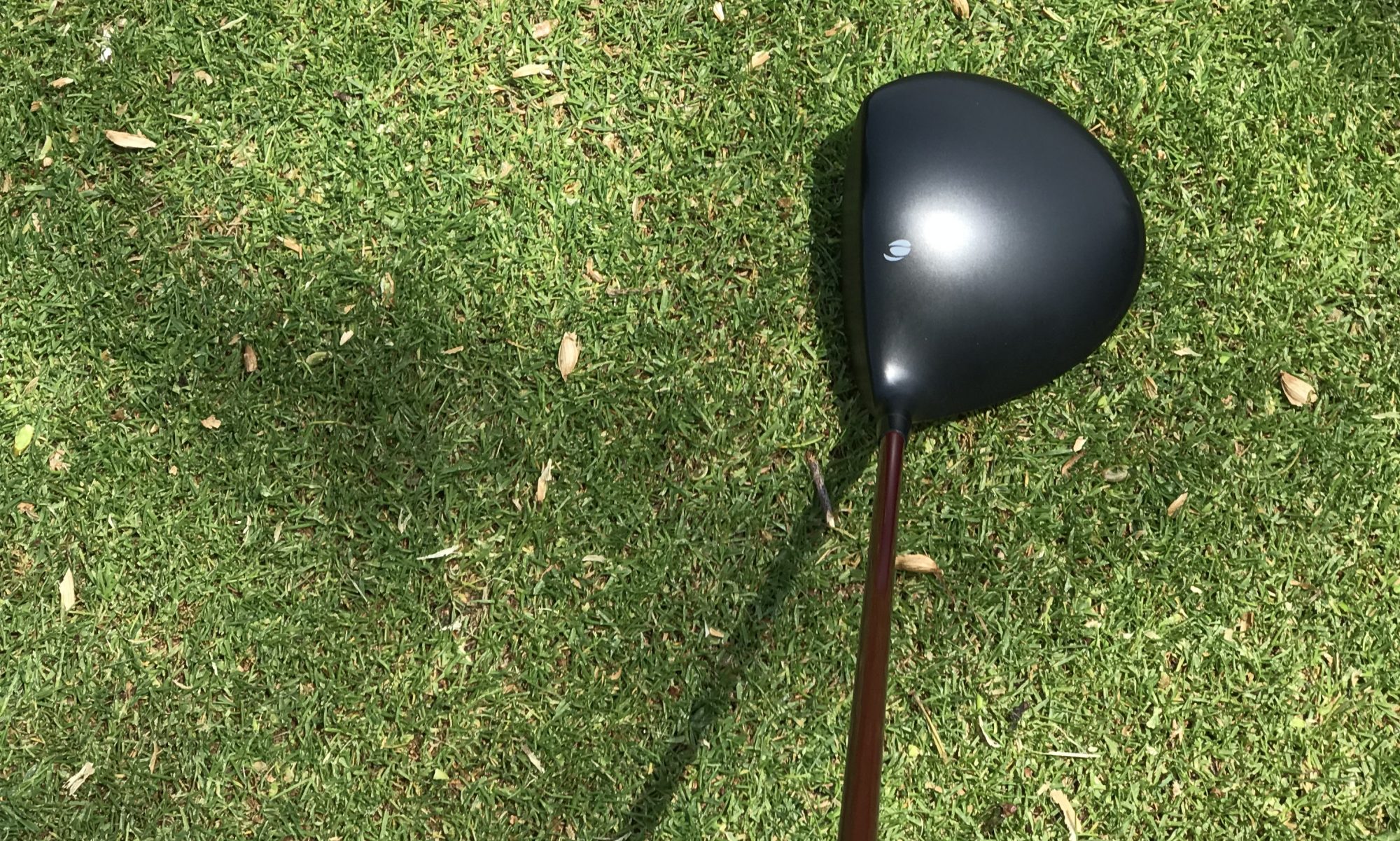
Golf: 2024 Golf Season Put A Wrap On It

It is officially 2025 which means that the 2024 golf season is over. Since I last wrote about my season on November 6th, I was able to play another 17 eighteen hole rounds of golf to make a grand total of 152 rounds for the year, which is my all time high for 1 year, breaking the previous record by 2. I shot my age another 4 times including three 73’s to bring that total up to 22 times for shooting my age. Nothing spectacular happened during these last 7 weeks of the season. Just a continuation of my up and down play. I have developed a new short game philosophy which has lasted more than 3 rounds and seems to be working out fairly well. The last round of the year was on the 30th under less than ideal conditions with some pretty high winds and temps in mid 40’s.

What am I looking forward to in 2025? Hopefully to play more golf and continue to improve becoming more consistent. I hope this new chipping philosophy works out. I have pretty much concluded that the key to consistency is to forget about physical keys. This can be difficult because when things are going bad in a round, you try to do various things, such as getting closer to the ball, changing ball position, or making a different swing move or temp. None of this ever really works and by chance if it does it is only for a short time. The mental process is the key. Having confidence in your club selection, the line of your putt or your overall shot plan will be the thing that makes a good score. All of this is rather a moot point at the moment because it does not look like it is going above freezing for about the next 10 days. Eventually I will get out there to start 2025, maybe this will be the year, if not I know I will drink lots of beer. Hit em straight.

Sports: College Football Quarterfinals

The first round of the College Football Playoffs (CFP) was not good for the ACC and the playoff committee. The two controversial picks by the committee got smoked as well as the ACC conference champion Clemson Tigers. The first round did not have any real surprises except that SMU had the big game chitters again and Ohio St. blew away Tennessee. There were no upsets and the top 8 seeds are in the quarterfinals. The quarterfinals should be more competitive with the committee’s automatic seeding process under close scrutiny during this round. The committee needs both Boise St. and Arizona St. to put in good performances against Penn St. and Texas or there will probably be a different way to seed the teams next year. I like the honoring of conference champions with a 1st round bye, so I am hoping that both of these games will be competitive. Let’s take a look at the quarterfinals in chronological order.

The Fiesta Bowl: Penn St. vs Boise St. Penn St. is once again a solid favorite, but I find it hard to believe that if the game is close, James Franklin will not blow it. The question will be if Boise St. can keep it close. I won’t be shocked if Penn St. loses this game, but I think they will wind up beating Boise St., but it will be a close one. If Boise St. can somehow run the ball and control the clock, then Penn St. may be in for a long day.

The Peach Bowl: Texas vs Arizona St. Texas is an even bigger favorite to beat Arizona St. Texas is coming off their most impressive win of the year. Arizona St. seems to have a lot of momentum as they finished the season strong. Texas’s offense has had its ups and downs this year. I think Arizona St. wins this game with the surprise of the playoffs so far.

The Rose Bowl: Ohio State vs Oregon. Even though Oregon is in the Big Ten now this has the feel of a good old fashion Rose Bowl. The Buckeyes are around 3 point favorites and I will be pulling for them, but Oregon I still feel is the cream of the crop, with Ryan Day getting back into his big game mode. Oregon wins and it might not be that close of a game.

The Sugar Bowl. Notre Dame vs. Georgia. You could say this is the marquee game of the quarter finals. With Georgia’s problems at quarterback and Notre Dame’s stout running game I like Notre Dame to win this game solidly.

I think this round will have much better games as the pressure will ramp up on all 8 teams. The great thing is to have all these meaningful games on New Years Eve and Day. I feel the final 4 will be Penn State (grudgingly) Arizona St. Oregon and Notre Dame. We will see how right or wrong I am. See you before the semis.

Golf: Playing The Game, Part 3

In this blog I am going to discuss the most important part of playing the game, putting. Putting can save your round or destroy your round. This will not be a how to putt article. There has been more written about putting than any other aspect of the game. I am going to look at 2 mental aspects of putting. One that I am very good at and the other that I am very bad.

The first one is you should expect to make every putt you attempt, no matter how difficult or long the putt is. If you don’t make the putt you should feel the disappointment. You don’t need to go ballistic over it but you need to really feel disappointed when it does not go in. This legitimizes your expectations. I do not advocate trying to get the ball in the 3 foot circle on long putts. In my view the more you are trying to make the putt the closer you are going to get the ball to the hole. I make my fair share of putts over 20 feet and that is because I expect to make it every time I’m over the ball.

Now we come to the dreaded short putt. Let’s define short as any putt that is 18 inches to about 6 to 7 feet from the hole. There are two things that make short putts unique. We not only expect to make the putt but we add that dreaded word should to the process. Ah, that word should. Like we should exercise more, eat better, sleep longer and make all putts between 2 and 6 feet. The 2nd unique thing about short putts is you have choices. You can try and bang the ball in the back of the cup, die the ball over the lip, or just try to find a happy medium. Even though longer putts can go in using all 3 speeds, no one is standing over a 20 foot putt thinking I am going to bang this in the back of the cup. Most of the time on long putts you are thinking of dying the ball in the cup or just going a short way by the hole. For whatever reason we rarely think of dying the ball in the hole on short putts. There was only one tour player who advocated dying the ball on short putts and that was Cory Pavin. Getting back to the dreaded word should. Why is it so bad? Because as soon as you start thinking should, it creates tension in the stroke, which leads to disastrous results. When you combine should with the perceived importance of the putt your chances of making the putt drops to well under 50%, no matter how short the putt is. As I wrote in the beginning of the blog, I am terrible at all of this and miss more than my share of short putts. I do not have any permanent solution. For me, if I make short putts early in the round then I will usually go on to have a good day. On the other side of the coin, if I miss them early then I have a hard time turning it around. All that I see on TV, I’m not the only one having this problem.

There will be one more post on playing the game and that will be on the short game. This post may be awhile because I am working on some things and with winter I may not be playing all that much to evaluate them. If I ever come up with a short putt solution I will pass that along also. All I can say until then, is get out and play, it is the only true measure of how good your golf game is.

Pirates Morning Report: Any Team In Need Of Mediocre Infielders Just Call The Pirates.

The one positive thing, pretty much the only positive thing, about the Pirates is their abundance of high quality starting pitching. An old adage in baseball is you cannot have enough pitching. However, the Pirate’s front office must feel that you cannot have enough infielders. In the case of infielders, quality is not even a consideration. Here is a list of the players that the Pirates have available to play 2nd, 3rd and shortstop. All of these players are on the 40 man roster and they have played any one of those positions for the Pirates or in the minors. Some of them have played in the outfield but all of them have a decent number of games in the infield. Here is a list of the future Hall of Famers with the position they have played the most in the infield or what I consider their best position: Liover Peguero 2b, Nick Gonzales 2b, Ke’Bryan Hayes 3b, Isiah Kiner-Falefa 3b, Jared Triolo 3b, Enmanuel Valdez 2b, Alika Williams SS, Ji Hwan Bae 2b, Nick Yorke 2b, and finally Tsung-Che Cheng SS. Count them, 10 players for 3 positions. The Pirates also have no. 3 ranked prospect Termar Johnson, who is projected to make his major league debut in 2025, playing, you guessed it, 2b.

These infielders have a lot in common. All of them are below average major league hitters. Half of them are not that good of fielders. The Pirates have 11 infielders that have the potential of being on the team this year. Granted Bae saw practically all of his limited action in 2024 in the outfield but he still has played 69 games at 2b for the Pirates. So, what’s a mother to do. The Pirates only carry 13 position players. It would be shocking if the Pirates wound up only carrying 12 pitchers. Will the Pirates just have a massive DFA party around March 24th? Most likely it would be Hayes, IKF, and Gonzales as the starting infield opening day. Quite frankly, these players would be the only ones that would generate any trade interest. I do not think that you would get much for them but certainly you could get some bullpen pieces. What if the Pirates traded all three of them. The new infield would look something like this, Triolo, Peguero, and Valdez. In reality this is not much of a drop off. When you add both groups’ OPS+ they come out exactly the same at about an average of 73. If Valdez gets off to a rough start, you always have Johnson waiting in the wings. You still have Williams, Chang and Yorke as replacements also. If you are going to get bullpen help, this seems the way to do it.

What do the Chicago Cubs know about Cody Bellinger that nobody else does. They traded him to the Yankees for a pitcher that is 30 years old and has pitched in only 24 major league games in his career. Plus, they had to give the Yankees 5 million dollar. Talk about a salary dump trade. The Pirates had to give up more to acquire Spencer Horwitz who has not had 400 major league at bats. It will be more than interesting to see how Bellinger does in the big apple. Will the Pirates ever pick up somebody and pay him between 15 and 25 million ? Highly unlikely. Let’s just hope they don’t spend another 35 million on garbage. I would rather see them do nothing that just pick up these washed up free agents again. Not only do they not produce but they block the progress of the younger players. One thing is for sure, the Pirates have enough infielders to field 3 teams. The sad thing is it does not matter what players you plug in, the 3 infields are going to perform about the same. Mediocrity is a hard thing to overcome. It may also be a hard thing to trade. Please, answer this cry for help, the other 31 teams in baseball. The Pirates need a right fielder and some bullpen arms. We can only pray.

Golf: Playing The Game, Part 2

In part 2 of playing the game let us look at the type of shots you need to execute in order to play the game, when to apply them and what to do if you cannot. There are four shots you need to do in order to play the game well. You need to hit the low shot, the high shot, the intentional draw and the intentional fade or cut shot. This is not going to be a how-to article. There are plenty of places you can go online to see how to hit each shot. There are many methods and they all will work. Each player needs to find a method that suits their game best. What this blog is going to be about is when to hit these shots, and the mindset you need to have in order to play the shots. I am going to take the shots in order of difficulty starting with the easiest and finishing up with the most difficult.

Hitting the ball low is by far the easiest of these shots. It is the go to shot on a windy day. In fact, you might want to play the low shot even when playing downwind. Most people would think that you want to hit the ball high when playing downwind. This is true when you are driving the golf ball. However, if you are trying to hit the ball a certain distance then keeping it low is still the way to go. Wind is so unpredictable you want to keep the ball down out of the wind if at all possible. If there is a bunker or a ditch in front of the green, then you will have to go high on the approach shot to the green. Depending on how far you are from the green it still may be better to hit the low shot a little right or left of the green. If the green is open in the front and you are playing on a windy day going low is the best way no matter which way the wind is blowing. You also need to go low if you are too close to trees that you cannot go over. At times when you have to go really low don’t hesitate to hit the driver off the deck to keep the ball low and have it go a fairly decent distance. Even though it is the easiest shot of the group, it is by far, the most important shot of the group. If you are ever going to reach your potential on the golf course, you must be ablet to play the low shot. Go out and find a method and then practice that method until you can hit a low shot with 100% confidence.

The high shot is the next necessary shot if you going to play golf well. Going over trees and bunkers to a green will come up every once in a while, during a round. If you are close enough to the green the high shot takes care of itself because of the loft of the club. There is more skill required if you are trying to hit a fairway wood up to about a 7 iron with some height and maintain the distance. The most dangerous of the high shots is when you are trying to go over trees. If possible, it is always better to go low around or between trees rather than try to go up, unless you have a high skill level on hitting the ball high. The high shot comes in handy but do not overdo it. Most of the time you are better off thinking low rather than high.

Next, we come to working the ball, hitting left to right or right to left. The left to right shot is the easier of the two to hit. The fade or cut shot is a great control shot and has many useful applications during the round. There is one cardinal rule, never curve the ball toward trouble. If there is more trouble on right of a hole than on the left do not hit the fade. The next rule which should be obvious, but most players do not seem to want to do this, is to aim left. If you are going to move the ball from left to right, you have got to give yourself enough room to aim the ball to the left so it will move back to right and end up in the fairway. This is the shot that you can swing fairly hard at. The harder you swing, within reason, the ball will have a tendency to move left to right. You don’t want the ball to curve toward trouble, but you don’t want to have to aim at trouble in order to allow the ball to curve back to the middle of the fairway. There will be times when the best shot to play is fairly straight.

The hardest shot to hit is the draw or the hook. There are situations on the golf course when the draw is by far the best to play. Anytime you want more distance, and the course is wide open, the draw is the shot. When you want an iron to have a little more distance the draw is the shot. A pin on the left side of the green where you can aim to the center of the green and let the ball work toward the pin. This is another shot where you must commit by aiming far enough to the right to allow the ball to work back to the center of the fairway. Draws are harder to control because they will roll further and at can easily snap into the dreaded duck hook. In the execution of the shot, you must swing easier to create the right to left movement that you want. Overall, the draw is not as intuitive as the fade. The rules are the same as they are for the fade but even more so when it comes to not curving the ball toward trouble. This particularly needs to be worked on at the range if you want to try and incorporate it in your game.

I think that anybody with a reasonable game can hit the ball low. It requires a little more skill and guts to hit the high shot in certain situations. Working the ball in different directions takes a lot more skill, time and effort to perfect. So, what are you supposed to do if you lack any of the three. Your game will have to be compromised but it does not mean that you cannot score to your full potential. Every golfer has a certain flight pattern to their normal shots. If your shot pattern is generally left to right, then you have to be more conservative when there is trouble on the right. You should never go flag hunting on pins that are on the left side of the green. If your game is off, you may need to swing a little harder than you normally would. It is the exact opposite for players who have a tendency to draw the ball. When your game is off you may need to swing a little easier. There is advantage in being able to work the ball but is not a game ender for those of you that don’t. For those of you that don’t work the ball the plan for every shot should be low, high, or normal. Always think low when the hole is tight and there is trouble on the right and the left. The final thought should be aggressive or conservative depending on how the hole sets up and where the pin is located. For players that work the ball the addition of right to left or left to right should be added. Playing the game of golf simply means playing to your strengths, avoiding problems until you reach the green or the green area. Once you are there the fun begins. It’s called putting. I will tackle it in the next blog.

Sports: Finally, A Real College Football Playoff.

For the first time in history College Football will have a true 12 team playoff. Of course there were a couple of controversies. The panel on ESPN felt like the first-round byes should be just given to the top 4 ranked teams, no matter if they were a conference champion or not. They pointed to Arizona St. and Boise St. getting 1st round byes instead of Notre Dame and most likely Texas. I disagree. After years of conference championships being pretty much meaningless, it is great to see them get rewarded with a bye. Notre Dame will just have to join a conference, poor babies. Picking SMU over Alabama to me was a no brainer. The always effervescent Nick Saban stated that Athletic Directors would start to schedule easier teams to get wins. Here was Alabama’s non-conference schedule, Western Kentucky, South Florida and Wisconsin. There are some real ball busters there. The fact remains Alabama lost 3 conference games and 2 of those to teams that had a combined conference record of 5-11. It wasn’t so much who Alabama beat, but who they lost to that kept them out of the playoffs. In previous years any time the committee has made a controversial pick or decision, they have come out smelling like a rose. Usually, the teams that they have put into the playoffs do pretty well and sometimes they become the national champion. We will see if SMU, Arizona St. and Boise St. do the committee proud. Now, let’s look at those first round games.

Three out of the four games will feature Big Ten teams. Now I am a Big Ten guy having graduated from Ohio State many moons ago, but I believe the Big Ten is the most overrated conference in football. These first-round games could go a long way to proving me right or might show that I am all wet, which won’t be the first time. Notre Dame will be a solid favorite against Indiana, which in my view should have been the team left off the bracket. I feel they won’t even give Notre Dame a game. However, if they do or somehow pull off the upset it will be a huge feather in the Big Ten’s cap and I hope the egg on my face will be scrambled. The Ohio State (Go Bucks) vs. Tennessee game is pretty much a toss-up. It should be a close game no matter who wins but if OSU loses a close one it won’t tarnish the Big Ten’s stature. Penn St. may not be as big a favorite as Notre Dame, but they are expected to beat SMU. James Franklin is one of the worst in game coaches in the country and if he lives up to his horrible play calling and strategy, SMU will have a real shot at this game. The Mustangs (I love that name) should come into the game with a chip on their shoulder and even though they lost the ACC Championship game, they made a great comeback, which should make them confident and ready to play. The Big Ten needs to win at least one of these 3 games to show that they deserve the rating that the committee bestowed upon them. The Big Ten is more likely to go 0-3 in this first round of the playoffs than 3-0. The remaining game is Clemson going to play Texas. Texas will be the solid favorite here but again Clemson is on a roll with a big Championship win.

Whatever happens I will follow it right along until the National Championship Game around the 3rd week of January. I will blog right before each round discussing the previous round and previewing the next round. The only team that will surprise me if they do not make it to the Championship game would be the Oregon Ducks. On the other side of the coin if Indiana wins one game, I will be shocked. The other 10 teams will not surprise me no matter what they do. Any one of the ten could make it to the title game. I love watching college football. I believe it is the most entertaining of the team sports. I am so happy that I am finally going to get to see a real college football playoff season. I do not think the system needs tweaked at all. Keep giving those byes to the conference champions. They deserve it, it is quite an accomplishment.

Golf: Playing The Game, Part 1

We take lessons, we watch videos, we get fitted for clubs, and we practice. After all that we go to the golf course and we have to play. Sometimes I believe all the things we do in preparation for playing is a subconscious way to avoid playing. More often than not after going through that process we seem to fail miserably on the golf course, and it is very difficult to improve. What is it about this game that seems to bring out the worst in our abilities? I admit I do not take lessons, and do not practice. I did get fitted for clubs, a set of irons once. I do watch instructional gold videos. Even though my game has not gotten any better I have not seen it decline either. If I could get a stroke for every time I have heard about how great somebody hit it on the range and now, they can’t hit the ball at all, I would break 70 at least 25% of the time. Today let’s look at some general things that go wrong when we get on the golf course and actually play the game.

The first problem is we are thinking about our swings rather than thinking about the purpose of the game and that is to get the ball into the hole. This immediately sets up a conflict between the body and mind. The body wants to perform a particular function, and the mind wants to get the ball in the hole. This leads to the basic problem of swinging too hard. There are other factors that lead to swinging too hard. We do not take the time to get a feel for our swing at the beginning of a round. Add to that the anxiety of trying to keep the ball in play and we get an overall tightness of the muscles which makes them harder to move and allow the club to flash through the hitting zone. On the 1st tee you must immediately get into play mode and think about where you want the ball to go. Whatever you were working on should just take over naturally. Start a round out slowly and conservatively until you get a feel for the round. Always take an extra club on the first hole. Allow your swing to have a mind of its own so to speak. It will gradually want to speed up as the round progresses and just let it do so. The main thing to remember is to stay in balance as much as you can.

When we start to play golf, we become way to conscious of our score whether it be good or bad. This mere fact of not knowing what your score is separates the men from the boys. First, we will look at the hot start. You play the first 6 holes much better than you usually do. You begin to put more emphasis on the results of each shot from that point on. You must get back in the mode that enabled you to get off to the good start in the first place. Part of that good start had to be related to making some nice putts. There is nothing from stopping you from making more. Conversely if you get off to a bad start over the first 6 holes you have to push through that and continue to think about how and where you want the ball to go. A lot of times bad starts can be related to poor or unlucky putting. Remember, all it takes is to make one putt to get the confidence back and make up some ground. You will never know when the big comeback is going to happen if you never give it a chance.

The final problem when playing the game is not adjusting to conditions and not being able to hit the shots that the conditions require. The shots themselves I will discuss in future blogs about playing. Most players think that not adjusting to conditions is only associated with conditions that are considered bad. Conditions that are considered ideal can get you into trouble if you are not paying attention. The types of conditions golfers play under are as varied as the weather. I have always been amazed at my own game when I shoot a really good score under way less than ideal conditions. It could be rain, cold or wind and I will sometimes shoot a round in the low 70’s. I often think that I don’t shoot that good a round when it is sunny, 80 degrees, and no wind. I think the reason for this is that when conditions are not that good, we start to think and plan better, and our expectations are low. When the conditions are ideal, we forget about how far a ball can roll into trouble when compared with very wet and soft conditions. Usually in the summer the greens can be faster, so it is more important to stay below the hole and avoid downhill putts. One of the toughest conditions to play in is when it is windy. All of these things add up to make the game more difficult to play, than practice. Playing the game can be very frustrating. Over the next 3 or 4 blogs I will cover certain aspects of playing the game. The main goal of any golfer should be to play to their maximum ability. It is a lot tougher than it sounds.

Pirates Morning Report: The Blake Snell Signing, High Risk But What Kind Of Reward.

The Dodgers signed Blake Snell to a 5 year contract that will pay him about 36 million a year for the next 5 years. Blake Snell was a high risk signing. He has played in the majors for 9 seasons. In only 2 of those seasons has he pitched in over 30 games. He has had 2 outstanding seasons which has netted him 2 Cy Young awards. Besides not coming to the post all that often his overall numbers are not that impressive. His career OPS+, the comparison stat where 100 is league average, is 128. Simply put, over the past 9 years he has pitched better than 28% of major league pitchers. Max Fried of the Braves is a free agent also this year. His career OPS+ over 8 years is 140. He has had his share of injuries, even more so than Snell. He has averaged 21 starts per year whereas Snell has averaged close to 24 starts. Snell’s biggest problem is his control. Even his Cy Young year with the Padres he averaged 5 walks per 9 innings. Until Snell threw his no hitter this year where he went 9 innings, he had never had a complete game. Let that one sink in for a while. Naturally when the Dodgers signed Snell all of the media was moaning and complaining that the system is broken, blah blah blah. The idea that only about 5 or 6 teams could afford Snell is ridiculous. Even the Pirates could afford Snell even though they would never admit it. However, what teams like the Pirates cannot do is take the risk of Snell having a mediocre year which he did for 3 of those 9 years. They also cannot take the risk of him taking the mound only 24 times or less which he did 5 out of 9 seasons. The Dodgers can take that risk and are taking that risk. In my view it is a big risk. The Dodgers have one of the strongest stables of starting pitching in all of baseball. The question will be how many of them will be able to come to the post. Not many did last year for various reasons. Despite all of this the Dodgers did manage to win the World Series. They still have the big three, Betts, Ohtani, and Freeman, who combined for 15 WAR last year. The starting 9 for the Pirates had a combined WAR of 8. This was not a player that the Pirates needed to or should have signed. It is obvious they need position players. Even for the Dodgers the Blake Snell signing is a burden for their payroll. It is very likely a signing that they will regret.

Pirates Morning Report: Let’s Set The Record Straight

The offseason is now in full swing, although not much has happened yet with everybody waiting to see where Juan Soto signs and for how much. The off season may be tougher on Pirate fans than the regular season because the Pirates do so little. Even when they sign someone it is usually on garbage. They spent over 35 million on garbage last year. With the exception of Andrew McCutchen and Aroldis Chapman, the free agent signings of Rowdy Tellez, Michael A. Taylor, Yasmani Grandal, Marcos Gonzales, and Martin Perez contributed absolutely nothing to the Pirates cause. The propaganda put out by the Pittsburgh media is the Pirates cannot afford someone like Juan Soto or other top free agents. The system is unfair. Baseball needs a salary cap. As I will show this is another example of pure garbage. Let’s look at the facts, Jack

The Pirate payroll in 2024 came in at around 85 million, which put them 29th in baseball only ahead of the Oakland A’s. When you remove the free agents from the equation in 2025 this will drop it to around 50 million. The only free agent the Pirates might resign would be Andrew McCutchen from last year’s bunch. The speculation on what Juan Soto might sign for is really wild. I will go with one number that has been bandied about. If he would sign for 700,000 million for 13 years this would come out to an annual salary of almost 54 million. This would put the Pirate payroll at approximately 104 million. If the Pirates can’t have a 100 million dollar payroll, then they might as well trade Paul Skenes, Oneil Cruz, Jared Jones immediately. People will argue that if you sign Soto for that much that the Pirates will not be able to sign those 3 players to long term contracts. I wrote before that one of the top priorities this year for the Pirates should be to sign Skenes to a 6 year deal worth 30 million per year. However, to get a player like Juan Soto that plan could certainly be tabled. Adding Soto makes the Pirates immediate contenders not only for the playoffs but for the World Series. Those revenues would certainly help toward extending those three players. The bottom line is it’s not that the Pirates can’t afford Soto, it’s that they really do not want to sign Soto. There are many in the list of top 30 free agents that could really help turn the Pirates into contenders. They probably won’t sign any of them even though they could easily afford at least two of them. Here is a list of the ones that fill the Pirates needs the most.

In no particular order, Pete Alonso 1st base age 30, Alex Bregman 3rd base age 31, Teoscar Hernadez OF age 32, Anthony Santander OF age 30, Tyler O’ Neill OF age 30, Jurickson Profar OF age 32, Tanner Scott left handed relief pitcher age 30, Christian Walker 1st base age 34, Paul Goldschmidt 1st base age 37 and good old Carlos Santana 1st base age 39. With the exception of Bergman all of these free agents listed are areas of need for the Pirates. There are some great starting pitchers out there and although this is a Pirate strength as the old saying goes you cannot have enough pitching. Getting another top of the rotation starter may send one or more of the starters to the bullpen, which is a good way to bolster a very thin bullpen. It might set up a trade for an offensive threat by sending one of the mid rotation guys to another team. Last year I wrote that the Pirates should sign Cody Bellinger. The Cubs signed him for 30 million, less than what the Pirates paid for all that garbage. Granted Bellinger did not really light it up last year with a slash line of .266/.325/.484 with a WAR of 2.2, think Oneil Cruz with defense. These numbers were way better than anything the Pirate first basemen and centerfielder put up in 2024. Would it had been enough to get the Pirates into the playoffs, who knows, but it would have most likely meant meaningful games in September. Will the Pirates sign anybody in the top 30 free agent market? Most likely not. There is always a risk when it comes to signing free agents. All of the above players are 30 or over. However, the Pirates in their current state have a lot of young unproven players. They only have 3 bonified major league position players, Oneil Cruz, barely, Isiah Kiner-Falefa and Bryan Reynolds, solidly. Any free agent they signm if they only perform at the Major League average will be a huge upgrade. They desperately need a corner outfielder and a first baseman. They are sitting there right in front of them. Instead, the Pirates will probably continue as the king of the waiver deals and minor league contract signings. Here are their last two. I will withhold their names to protect their families and agents from embarrassment. Waiver player no. 1 has 139 major league at bats with a slash line of .209/.245/.331. He is an outfielder and a 1st baseman but not like Cody Bellinger. With Waiver player no. 2 it even gets better. Career minor league player, 28 years old with 139 major league at bats. His slash line is .152/.222/.273. What I get a big kick out of is when you read the articles about these acquisitions they somehow write about how they can help the Pirates. They actually have the audacity to give some justification to picking up these players. The only things these players can do is to help continue the losing ways of this pathetic organization. It is too bad there is something not politically incorrect about the nickname Pirates. There would be no problem coming up with the Pirates new name. The Pittsburgh Pathetics. The Pirate payroll is set up perfectly to make at least 2 free agent pick ups that would run between 20 and 30 million per year per player. It is so sad that this has practically no chance of happening. Which is the same that can be said for a winning season next year.

Golf: Revisiting Grip Pressure, Overswinging, and Starting The Downswing.

I wrote these three articles about 2 to 3 years ago and they remain my most popular blogs, especially the one on grip pressure. The overswinging blog was titled You Cannot Overswing and the blog on starting the downswing was Maybe Sam Snead Was Right After All. Snead had a unique thought on how to start the downswing which was mostly criticized by other golf instructors. Over these last 3 years I haven’t really changed my mind, but I thought it might be time to clarify a few points in each area and even strengthen some points because there are still instructors out there that teach a different philosophy that in my view hurts the average golfer more than helps. All three subjects are what it takes to hit a golf ball consistently. A most important aspect of the address, the grip, how to make a backswing, and the first move in making the downswing. If you can do these things correctly then your chances of making solid contact with the ball increase dramatically. Unfortunately, golf instruction has some strange ideas on these subjects, especially the first two, which makes learning the game very difficult. They are not as far off on starting the downswing mainly because there are as many ways to start the downswing as there are body parts. What makes this difficult at times is that the methods used will work, it just boils down to finding what might work for you. This is different when it comes to the grip and backswing, because what most golf instruction teaches is wrong. So, let’s dive in.

There are way too many endorsers of the light grip. I saw a recent video aimed at senior golfers that said it is very important to start with a light grip. They say that your grip will tighten up automatically when you start to swing. What happen to constant grip pressure during the swing. Most of the older instruction books write about having a firm grip. The pressure points are the middle two fingers of the right hand and the last 3 fingers of the left hand. All of this light grip stuff started because some beginners take a death grip on the club. To put a number on it, let’s say that 1 is the lightest you can hold the club and 10 is the tightest you can squeeze the club. In order to grip the club with the correct firmness I would put a number around 7 to 8 depending on the shot. 8 for the driver and longer clubs and for hitting out of the rough no matter what the club. If you don’t want the club closing over out of the rough, you had better firm up those last 3 fingers of the left hand. For all short shots and short irons I would say it should be closer to a 7. It is perfectly fine to work your fingers and have some hand movement before the shot. Just before you start the swing you want to feel that the hands are firming up and ready to control the clubhead. Your hands are never going to be able to react to the movement of the swing, especially at the point of contact with club accelerating at full speed. You do not need to choke the life out of the club, no pun intended, but you do need to take full command of the club and the clubhead. There is no way you are doing this with a light grip. If you played these sports think of how you held a baseball bat or a tennis racket. Be the firm handshake, not the dead fish.

I still believe that you cannot overswing. However, you do have to do two things at the end of your backswing. Your weight should be solidly on the right foot, and you should feel that you are in balance. One of the biggest swing faults I see is that people take too short of a backswing. This short backswing is caused by anxiety in trying to hit the ball, and the odd feeling of turning away from your target. It does not help that most golf instruction talks about restricting the hip turn. This all started with what is known as the X factor. The X factor being the more you can turn your shoulders without turning your hips the farther you will hit the ball. The basic swing is a 45 degree hip turn and a 90-degree shoulder turn. This is a difference of 45 degrees. The goal of the X factor swing is to increase this 10 to 20 degrees. If you do this, you will hit the ball farther. Is this correct. Absolutely. Will you be able to play golf well into your 70’s with this method. Probably not. A big hip turn is essential if you are going to minimize the wear and tear on the body. I feel the hips should turn at least 45 degrees and you should try to turn them anywhere from 60 to 70 degrees. The great Bobby Jones had a huge hip turn. None other than Jack Nicklaus had a big hip turn. He even raised his heel off the ground to ensure that his hips were turning quite a bit. Once you start making a big hip turn you will really feel your swing loosening up and become more fluid. The only danger of making a big hip turn is that as you turn toward the 70 degree mark, there may be a tendency to throw the body toward the left side or on the left foot. Make sure you maintain the weight on the right foot at the top of the backswing, and you will be hitting the ball in an effortless way. You will not be stretching the left side of the body to its limits, causing damage to tendons and muscles. Try a big hip turn backswing and let the body heal from restricting those hips.

All right, we are at the top of the swing. Now it is time to start down and make contact with the ball. There are many correct ways to start the downswing. None of them are wrong. As a player you need to find the one that works for you. However, you don’t need to be a slave to any of them. If one of them does not seem to be working, then go to another one. Before we get to all the ways to start down, let’s look at what Sam Snead said. He said that the best way to start down was to think about pulling a rope down that was attached to a church bell. Snead was really panned for that idea because as golf instruction developed and video came into use, the lower body became king as the way to start down. The idea was to keep the hands out of the picture until the last minute when they would release for a powerful smash right at the ball, but not any sooner. What Snead did not emphasize when he wrote about this, is that the hands need to start straight down form the top. All of a sudden you see this being advocated under the heading of the gravity swing. When you get to the top drop the hands straight down. The difference is, Snead used the word pull, and now people are talking about letting the hands just drop. To me this indicates a more passive move to start the downswing, where Snead’s words of pulling the hands down is more aggressive. It is a matter of semantics but there is no question this is what Snead was telling people to do 65 years ago. There are other effective ways to start the downswing. I am going to briefly mention a number of them without any explanation. If you want to read more about them, you can look them up. They all can work. Straightening your left leg. Kicking your right knee toward the ball. Raising your left shoulder. It helps if you are thinking of lowering your left shoulder during the back swing. Bump your hips to the left before turning toward the target. Just shift you weight to the left foot before starting down. Falling into the lead foot. Unscrewing your backswing with the legs and then firing the shoulder away from the body. Moving the core forward then increasing the arm speed. Lots to choose from there and none of them are bad. However, none of them are going to give Snead’s method of starting the downswing a thumbs up. Believe me it is another effective and yet very simple way to start the downswing. It is a method you should definitely try.