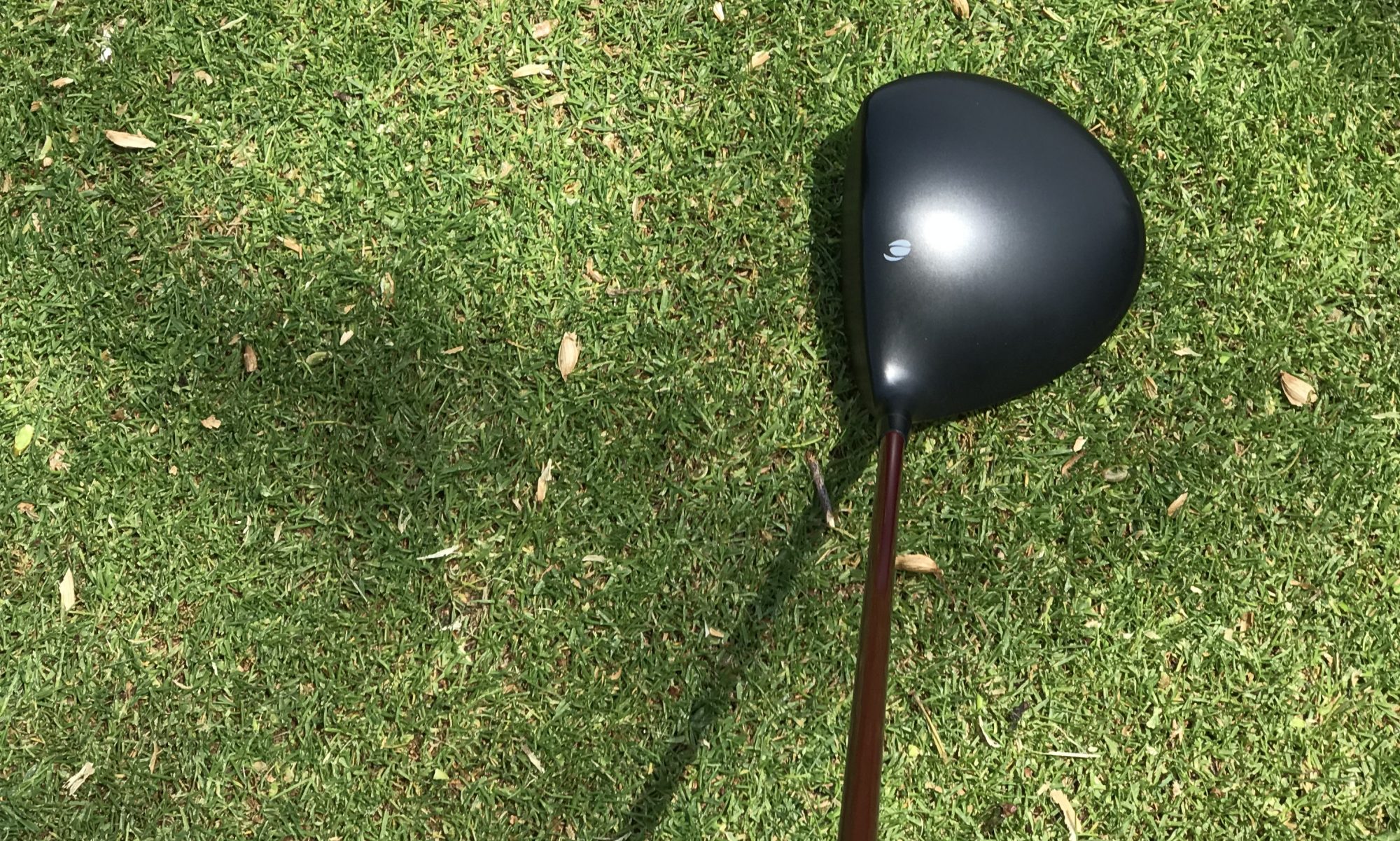
Golf: Practice Swings

To practice swing or not to practice swing, that is the question. Whether ’tis nobler in the mind to suffer doing something for no reason or take the risk of having irreparable damage done to your golf game for failing to do so. Back when Shakespeare wrote “to be or not to be,” nobody in golf was taking practice swings. It was not until the turn of the 20th century that golfers and golf instructors thought there would be a benefit from rehearsing your golf swing before every shot. When you think about it, no other sport really does a practice swing. You never see a pitcher turn his back to the plate and go through the complete wind-up without throwing the ball. You do not see a tennis player go through the motions of hitting a serve and then hit the serve. You do not see a bowler take a full 4 or 5-step approach without the ball. Practice swings have been part of golf for over a hundred years. There are many possible benefits to making practice swings. Despite these benefits, we do not seem to be able to hit the ball with the same motion as our practice swings. There are many videos on YouTube to teach you how to hit the ball with your practice swing. These may be some of the worst instructional videos in the history of golf. First, let’s take a look at the general consensus when it comes to the benefit of practice swings. There are different feelings about practice swings for each part of the game. The full swing, the short game, and putting all have different ways you should be thinking of practice swings.

For all full shots, the internet says the practice swing can benefit these parts of the game. The practice swing can serve as a muscle memory rehearsal. You can create the swing that you want for a particular shot. You can use the practice swing to ingrain a new swing thought. It can help you with your tempo and rhythm. It can give you a moment to increase your mental focus. After all of that, it is a wonder that anybody could execute a golf shot before 1900. Short game practice swings are more shot oriented. You want to engage with the turf on your practice swings with chips and pitches. You want to gauge how far you want to hit the ball and the trajectory you want to use. You want to establish your swing length for the shot. Putting is about the same as the short game for practice swings, but you want to be even more precise with your distance control and rhythm of the stroke. With putting, you may want to take your practice swings from behind the ball. There is not a lot of opinion that is against the practice swing. The biggest negative is if you are doing it wrong, then it is more of a problem than a help to your game. It may ingrain bad habits, plus it might slow down your game if you take too many. It may cause some overthinking of the shot. Then there is the problem of not being able to hit the ball with the same technique as you used on the practice swing. This is the same problem as not being able to take your game from the range to the golf course, which I have written about before. It simply boils down to the fact that you cannot fool your brain. The brain knows you are taking a practice swing just like it knows you are now going to hit the ball. I will get into that in a future blog. For now, do not worry about it because there is no solution for either problem. Needless to say, I disagree with just about everything that is written about the practice swing on the full swing and about half of what is written about it in the short game and putting. So let’s cut to the chase.

The full swing practice swing should be nothing more than a loosening device to help you swing. It is especially true for me because it is rare that I ever hit balls before a round. Usually, I will start out with big practice swings to begin with and then, as I warm-up, I will take slower or shorter practice swings. Maybe the practice swing can help with some rhythm issues, but it still boils down to executing the swing. I watch a lot of old film and videos of the pros during tournament play, and all of their practice swings were just a relaxed version of their swings. Few of them ever took a full hard swing with their practice swings. Basically, you should never try to create a full swing shot with your practice swing. You may create part of it, like a high follow-through for a high shot. When it comes to the short game, I think one thing that is overlooked when the pros are preparing for their shot is the way they take a practice swing. It is more of a back-and-forth motion, not taking any time to reset. It is like they are trying to get a feel from moving backward and forward, then forward to backward without ever stopping. I think in putting, the way you take your practice swing is dictated by how you are putting. If you are having a good day at distance control, then the practice stroke should be more of a loosening device. If you are having trouble with green speed, then the practice strokes need to be done more precisely to mimic the way you are going to hit the putt. We all know the one thing that practice swings do is to slow play down. You see it all the time the individual who takes 2 or more practice swings for every shot. The bad thing, is that individual is probably not going to break a 100. So just hit the damn ball.

So are practice swings a necessary and unique element of golf? Most likely yes. I have played a few rounds without ever taking a practice swing. Sometimes I have done this in the middle of the round. Like the practice swing itself, there is no rhyme or reason why I will suddenly stop taking practice swings. Sometimes I think it is just to show that the game can be played without the practice swing. One of the main reasons you should try not to make your practice swing exactly like your regular swing is how many times do you do something exactly the same way. One of the simplest ways to show this is to simply write your name. Then try to write it exactly the same way. You will never be able to do it. Same thing with your golf swing. Let’s say that you feel you make the perfect practice swing for the shot you are trying to play. In some respect, you have just wasted that swing. When you try and do it for real and the results are poor, it just increases your frustration. Even on the short game, you do not want to feel that your practice swings are that precise. Always think in general terms and just get a good feel for the shot. The practice swing in golf, even though it is unique when compared to other sports, is here to stay. Don’t overdo it and don’t overthink it. Take it for what it is: a way to loosen up and get ready for the full shots, a way to get a general feel for short shots. Don’t be lackluster with it, especially for the short shots. Just do not get into the practice swing too much. It’s only when you hit the ball that it really counts.

Pirates Morning Report: Stop The Presses The Pirates Make A Trade

The Pirates made their first significant move during this off-season by trading Johan Oviedo to the Boston Red Sox. The main player the Pirates received was Jhostynxon Garcia, soon to be 23 years old, an outfielder who has spent his career essentially in the minors. That first name will certainly be a mouthful. Greg Brown will probably just call him Horowitz Garcia. In 1,552 plate appearances at all levels of the minors, he has slashed .261/.351/.464. Good but not overly impressive numbers. This past year, in 351 plate appearances in AAA, he slugged .498. He is known to be a decent fielder and has played a lot of games in center field. This is the kind of trade that is low risk, high reward for the Pirates and the Red Sox. This trade could go either way for both clubs; it could be a dud for both teams, or one team could look like they fleeced the other team. It could be a great trade for both teams. Only time will tell. The Pirates now have two young outfielders with some high potential: Esmerlyn Valdez, who will turn 22 in January, tore up the Arizona Fall League. He has not seen any action higher than AA. It will be interesting to see how fast the Pirates allow these two to make it to the parent club. There were two other prospects sent to the Red Sox, a pitcher and a catcher. The Pirates received an 18-year-old pitcher to complete the five-player deal. The Pirates are fortunate that the Red Sox have such an abundance of outfield talent.

The Pirates still have their two big contract players, Bryan Reynolds and Mitch Keller. Together, they will make around 31 million in 2026. I don’t see how the Pirates can make any kind of splash in free agency and still have both on the team. Getting rid of both makes signing a free agent with a long-term 35 to 40 million dollar contract very feasible. Keeping them makes that almost impossible. Keller would still yield a good return. Reynolds would strictly be a salary dump, and hopefully, the Pirates may get a good bullpen arm, especially a left-hander. The Pirates making some kind of move before Christmas is pretty miraculous. Now, if they do something next week at the winter meetings, I may have to go on some heart medicine. This first trade may not turn out all that well, but it does make you feel that the Pirates may actually be trying to put a better team on the field. Let’s hope we see some more moves sooner rather than later.

Share Five Things You Are Good At.

Being retired, I am not sure there are 5 things that I do let alone do well. So let’s get down to basics. As I mentioned in the previous blog, I am good at sleeping. Not a small thing to be good at, but even that may be up for debate. Even though I have no trouble falling asleep, I get about 5 to 7 hours of sleep a night. At best maybe 7.5 hours, but that is rare. To me, this is another example of science trying to lump everybody in one basket. I am not too sure where they came up with 8 hours, but I would never be able to do that. Not before, not now, and not ever. Am I concerned about this? Not at all. I am good at golf. My index is 4.8. I played 166 rounds and have shot my age, 75 or better, 50 times this year. Good for an old fart. I am a good cook. I have been cooking for about 20 years now, and at least I like what I cook and have received many compliments when I cook for other people. Like many things, I read and learn and sometimes go my own way. That’s what I like most about cooking: the experimenting and creativity you can do. I do not always follow the advice of well-known cooks. One example is when I grill salmon. They say to start by putting the flesh side down. I start by putting the skin side down. I only cook it for about 2 minutes. What this does is let the skin release some of its fat onto the grill. Then I flip and cook the flesh for about 5 minutes. With the fat on the grates, it makes removing the salmon a lot easier when it is finished. I put the salmon right on the grill with no barrier. It comes out pretty good, even if I do say so myself. I never follow the directions for baking frozen pizza. Frozen pizza has come a long way. I heat the oven to 475 to 490. I get the pizza out for about 10 to 15 minutes before I put it in the oven. I cook it for about 8 to 10 minutes and turn it about 180 degrees depending on how it looks at the 5-minute mark. Try it the next time you do pizza. I take pretty good care of myself. I am a firm believer in moderation in everything you do. I must be doing a good job because I am 75 years old and on no medication except eye drops for glaucoma. Lastly, I think my blogging has improved to a good state. I have been doing it for 15 years, some years not as much as other years. I have written about golf courses in Western Pennsylvania, golf instruction, meditation, food, and those exasperating Pittsburgh Pirates. I have written about other sports subjects including the Steelers and college football. I have found 5 things. This would have been a much easier blog if it were to name 5 things I’m lousy at: taking care of things, cutting the grass, cleaning up, making money, painting, trimming shrubs, preparing for holidays, predicting sport outcomes, having a good diet, raking leaves, doing laundry, and organizing space. Now that would have been a very long blog.

Morning Person

I am definitely a morning person. I get up early on my own most of the time. I will get up anywhere from 5 to 6:30 in the morning even if I have nothing scheduled to do. However, I do not trust myself totally; if I have to get up early, I will set an alarm. I do practically all of my blogging in the morning and at the very latest in the afternoon. I will rarely write anything after 7:00 PM. When golfing, I prefer an early tee time compared with a later one. I will say this: when I was working, I used to have days when I teed off at the crack of dawn. Those days are over, not so much because I do not want to get up but because you can run into irritating course conditions. Most of the time, the greens have not been cut. There will sometimes be a heavy dew on the greens. The greens get cut when you are playing. You start out with greens being slow and then the speed gets quicker because they are cut and the dew is gone. Another very early tee time problem can be fog. There is nothing worse than not seeing your ball no more than a hundred yards off the tee. In the summer, I like teeing off between 7:30 at the earliest and 9:00 at the latest. There can be exceptions, especially if it is really hot. I do not mind the earlier tee times in the spring and the fall. I know it is chillier and the threat of a frost delay can happen. With the early time, you will still get out closer to your tee time when there is a frost delay. Most days, the temperatures will rise rather quickly. When it gets to 7:00 PM, I usually hit a wall. It is veg time. I watch TV and just chill. I will sometimes read, but I find that can be difficult for me to concentrate in the evening. I wait until I feel sleepy to go to bed. I never have a set time to go to bed. It could be as early as 9:30 and as late as 11:30. Most of the time, it is somewhere in between. I usually get about 6.5 to 7.5 hours of sleep. I have only missed a night’s sleep about 2 or 3 times over the last 50 years. I have been blessed that I can always go to sleep. There is no doubt I am a morning person.

Pirates Morning Report: Updates

As November comes to an end, the Pirates are making more national noise than normal. They are not really doing anything, but for some reason, the national media thinks they are going to be more active in the free-agent market. They have been connected to Kyle Schwarber and J. T. Realmuto. They supposedly offered a deal to Josh Naylor, but then that was disputed. They may try to sign their no. 1 prospect Konnor Griffin to a long term deal. There have been at least 3 MLB insiders who have written that the Pirates are going to spend more money and make a splash in the free-agent market. Most people around here are taking the attitude of, I will believe it when I see it. I take the same view, plus I really do not want to see the Pirates make a so-called big splash in the free-agent market. J. T. Realmuto has seen better days. Last season, his OPS+ was 91. Joey Bart’s was 96. You could argue that Realmuto is better defensively, but his contract last year paid him almost 24 million dollars. Now he may not make that with a new contract, but Joey Bart, who is arbitration eligible, is projected to make close to 3 million. I do not think Realmuto should be signed by the Pirates. They have greater needs at corner outfield and third base. Schwarber would be a huge upgrade at DH, but he is not going to help where the Pirates need it most. There are only 3 free agents that I feel the Pirates should consider signing: Munetaka Murakami, the third baseman from Japan; Kyle Tucker; and Bo Bichette. These are the only free agents under 30 years of age. Cody Bellinger is 30 years old, but I think he won’t be worth the price. Konnor Griffin is being talked about as the possible starting Pirate shortstop. He has played centerfield, allowing Bichette to move to shortstop. This would also put Oneil Cruz in right field, where he belongs. Cruz could be the DH also, which may be the best move of all. Despite all the media talk about the Pirates spending, I will be surprised if they do. I still think the best way to improve the team is through trades with Bryan Reynolds and Mitch Keller as the trade chips. Now let’s look at what the Pirates have actually done.

So far it is nothing more than the same old Pirates. Not only in what they have done but also in what they have said. First of all, they had to move some players out of their 40-man roster to protect players from the Rule 5 draft. The Pirates made this sound like they had some tough decisions to make. You’ve got to be kidding me! They let go of Colin Holderman, Dauri Moreta, Alexander Canario, and Ronny Simon. Apparently, Cam Devanney went to Japan. Here is who they left on the 40-man roster: Cam Sanders, 29 years old, with a lifetime 4.39 ERA in the minors and 6 major league appearances. Enmanuel Valdez is going into his age 27 season with a lifetime OPS+ of 87. His lifetime slugging is .392 with 2 years in Fenway Park. Will Robertson heads into his age 28 season with a lifetime major league average of .129. In six minor league seasons, he has a slash line of .247/.334/.458. I do not know if the Pirates will make any more roster moves. If they lose anybody in the Rule 5 draft, could they be any worse than those 3? They could have easily made more room on the 40 man roster. Hopefully, they won’t lose anybody, but time will tell. Then they signed Jack Suwinski and Yohan Ramirez. The combined deals came to about 2 million dollars. Not a lot of money by today’s standards, but why sign them at all, especially Ramirez? Since 2020, he has been with 8 teams and twice with the Pirates. He has a career ERA of 4.71 and an ERA+ of 90. He averages 4.5 walks every 9 innings. Now that’s a guy you want coming in when the game is on the line. If the Pirates lose a pitcher in the Rule 5 draft, he could not be this bad. Obviously, the Pirates are hoping for a miracle when it comes to Jack Suwinski. Maybe he should try batting right-handed; it would make about as much sense. They made a couple of their typical minor league signings. When you look at the way this organization thinks and performs, even if the Pirates were to sign a top 10 free agent, it would probably wind up being a big waste of money. They need to be giving all that potential money to one person: Paul Skenes.

Pet Peeves

The first is the way people drive. Watching people drive makes me wonder why there are not more accidents. They do not use turn signals. They do not stop at stop signs. They tailgate. What the purpose of tailgating is, I have no idea. On a road with traffic lights, I see no reason to swerve in and out of traffic. I see this all the time. A car moving fast and changing lanes trying to get ahead, and then three traffic lights later, there they are right in front of you. Better yet, they are in a lane that is backed up, and you get about 3 to 4 cars ahead of them in the other lane that is waiting for the light to change. When the light changes, you get to see all the maneuvering again. When trying to make a right or left turn, the person veers out the opposite way they are going to turn. The other one that is really good is the driver that is trying to direct traffic while they are driving. Listen, I understand if traffic is at a standstill and you let somebody out of a parking lot or side street. This will be when traffic is moving, and the car stops to let someone out. They may try and let someone make a left turn in front of them, and maybe someone is walking at that street’s crosswalk. Pulling out in front of oncoming traffic or when coming out of a driveway, it’s like let the world wait; I am not waiting. There are other driving issues, but you get the picture.

The next thing is grocery stores. There are two pet peeves with them: one they could control and one they should control. Why do they move things around? You will go to an area where a particular food item has been for months or even years, and bingo, it is not there anymore. It’s not even in the vicinity. You go ask, and it’s like 3 aisles over and usually in an aisle that you have already been down. They will move things in the produce department. The damn area is not that big to begin with, and they will switch things around. How does any of that make any difference in running the store? The other thing that should be banned is family shopping. Look, I do not expect anybody to have to get a babysitter to go grocery shopping. When I see a mother or a father with 2 or 3 kids in the grocery store, I have no problem with that. However, when I see both parents and the 3 kids cluttering up the store, that’s when I shake my head. What is that? Do they feel that grocery shopping is such torture that they have to have the spouse suffer it along with them? My point is, have one go grocery shopping and the other one stay home and watch the damn kids. Usually, both parents are not paying attention to the kids anyway, and they are handling all the food, screaming and yelling at each other and making the experience just as bad for everyone else as the parents are perceiving it for them. Grocery stores should have a guard at the door, and when they see the family coming, only allow one parent in the store. The kids and the other parent can go back home and pick up the other parent when they are done. No more family grocery shopping. Life would be so much better for everyone concerned, including grocery store employees.

Lastly, is punting in the NFL. There are 32 punters in the NFL. That is all they do. They take two or three steps and kick the football. They may have some other duties like hold for the placekicker on field goals and extra points but that is it. Seven days a week that is all they have to do is kick a football. I am surprised that NFL teams do not hold worldwide tryouts to punt the football. There has to be 32 people in the entire world that can kick a ball at least 70 yards. This has to be the smallest specialty in the world, 32 people. Why is it that they do such a lousy job. Week after week you see NFL punters shank punts, not be able to place the ball within a 10 yard area, hit low line drive punts that are returned for big gains and punted balls that do not go 30 yards beyond the line of scrimmage. Remember that is all they do. They kick the ball. They could do this for 5 to 8 hours a day for 7 days a week. They appear to be trying to disprove the saying that practice makes perfect. With new techniques to strengthen muscles and unlimited practice time there should not be a punter in the NFL that does not kick the ball at least 65 to 70 yards for every kick. Just think if these guys were surgeons, they would be killing people routinely.

Golf: Course Management Vs. Having Fun

Everyone wants to improve their game. When your handicap gets down under 10, many say that the best way to get your handicap down further is through your short game and how you manage getting around the course. Most course management advice is usually on the conservative side. In trouble, get out of trouble. Keep it in the fairway even if you lose distance. Shoot for the middle of the green. Try to stay below the hole. I could have titled this blog, maybe we are taking our games too seriously. Some people would argue that the advice I am about to give here is because I grew up watching Arnold Palmer. He had that go-for-broke style. You could argue that he cost himself as many majors with that style as he won. In later years, Phil Mickelson was a player of similar ilk. Many critics of Phil simply felt he made many dumb moves when it came to the shots he tried to play. Palmer was never criticized that way. Perhaps it was because he had so much early success and those spectacular comeback wins. Beyond that, there is no doubt that the consensus is that to improve your score, you play on the conservative side. But really, is that any fun? That is an easy question to answer; hell no, not even close. Even though we are all trying to get better, are we playing for all that much? Even if we are wagering within the friendly confines of our foursome, we certainly are not playing for that much money that it should make a difference. Let’s look at each area of the game and see what the advice usually is and why it is okay not to follow it.

Off the tee: You want to hit the fairway even if it means that you have to give up some distance. I played at a golf course that I belonged to where on the 14 non-par 3 holes, if you were going to play the course correctly, you would only hit the driver 4 to 5 times. I hit mine 13 times. There was only one hole, a very short drivable par 4, that I laid up on. The area of the green was surrounded by trees and bunkers, and it just wasn’t worth it. I would hit driver there about 3 times a year just to do it. I was working back then, and when I played on weekends, I was going to let the big dog eat. Did this cost me strokes at times? I think it did. However, I had a good time doing it. To this day, I almost always hit driver off the tee. I enjoy driving the golf ball too much. There have been many instances where I have scrambled for a par, when the driver has gotten me into trouble. Sometimes it has really gotten the round headed in the right direction. Hitting the driver in golf is to me the most fun part of the game.

Through the green: Now that you’re off the tee, let’s look at some other course management rules or suggestions. Play for the middle of the green. When in trouble, i.e. the woods, get out of trouble. On a par 5, lay up to a good distance to shoot into the green. I rarely follow any of those suggestions. I always flag hunt unless the pin is in some ridiculous spot or I am too far away to go over a bunker. When I am in the woods, I am always looking for a way to go to the green, whether it be high or low. I always try to get as close to the green as I can on a par 5. Why do I do this? First of all, it is fun to try all the shots that are required. I like to bend it toward the flag. Even if I miss the flag on the same side and short side myself, as they say, the greens I play are not that fast, and the short-sided pitch is not that difficult. Making a great recovery shot is really fun. Going around or through a bunch of trees and getting the ball on the green or near the green really is a thrill. Even if it does not turn out, I can still make a bogey most of the time. On a par 5, I hit my 3 wood even if I cannot get home in 2. It gives me great practice with my 3 wood, and I feel I can get the ball just as close with a 30 to 50-yard pitch or bump and run as I can with a full sand wedge at 100 to 110. I will lay back if there is severe trouble around the green, a creek or deep bunkers.

Around the green and putting, there is not as much strategy going on. Even the advice of not getting above the hole does not hold that much water when it comes to playing most public courses. The greens are usually not that fast. The faster the greens, the more you should adhere to that rule. Don’t get me wrong; there are going to be times when you have to take the conservative route with course management. If you want to have real fun playing golf, then 95% of the time, go for broke. Just remember, nobody is going to get hurt or die. This is just a golf game. Who knows, you may pull off a shot that you will be talking about for the rest of your life. I have never heard anybody at the bar talk about chipping out from the woods on number 12. It is time to have some fun playing this game. It is rare when you get that chance.

June

What’s your favorite month of the year? Why?

I like June because it is the only month that does not have a holiday. I know there is flag day but I don’t think even the banks close for that one. As you know I hate all holidays real or fake like Halloween. The other reason to like June is the days are long and the nights are short. It is the month I played 54 holes of golf in one day. My second favorite is July. My daughter was born that month and I got 2 holes in one that month, one in 68 and another in 88. I would like September and October but the days are getting noticeably shorter and of course October ends with that pagan holiday Halloween. If I could change one thing I wish there was 12 hours of light and 12 hours of dark all year around. I would be willing to give up those long days of light of close to 17 hours. I know this is an impossible wish but what the hell we can all dream. Speaking of months who came up with this shit. I mean some are 30, some are 31 and of course we have stupid February with 28 except every 4 years 29. Why don’t we have 13 months of 28 days each with February having 29 every year. It would be fun naming the 13th month. Then every 4th year we could have the one day month between June and July. I guess a better question would be where do I come up with this shit. See you in June.

Golf: Our Changing Golf Games

One of the many mysteries of golf is why our games change so much from day to day. You will hear many golfers bemoan the fact that one day their drives are great and their iron game is horrible. Then the next time out, the opposite is true. Everything is clicking from tee to green, and they cannot make a putt. Their putting is fantastic, but they can’t get a ball close to the hole. They are having a horrible time with their short game when it has been good for the last 4 rounds. Here is one that I have experienced when playing competitively. For maybe the last 3 to 4 rounds I have played going into a tournament, I may be driving the ball extremely well. Maybe it’s my iron game that has been spot on. Possibly, I have had 5 very good putting rounds. The day of the tournament, that best part of my game, becomes the worst part of my game. This part of golf has been brought home to me more now that I am retired and get to play a lot more golf. Since 1996, even when I was working, I managed to play 3 to 4 times a week and probably had around 2 range sessions a week. Now that I do not practice anymore, another part of this phenomenon has been brought into focus. Whatever the bad part of my game was the day before seems to go away on its own the next day. This happens even on the pro tour. Tour players’ scores will sometimes vary by 5 to 10 shots from round to round. After a round, they are seen on the driving range “fixing” the problem. It looks to me that going to bed and waking up solves the problem too. This may really be the biggest mystery in golf. Until somebody comes up with the reason this may happen, we have to find a better way of dealing with it.

Most of the time, we are looking to find ways to correct the part of our game that has gone haywire during the round. Instead of trying to do that, we should just make the best of it. The problem will most likely correct itself the next day. Some problems are bigger than others. Let us start with driving the golf ball. You will hit your driver 13 to 14 times a round. If your shots are having a particular pattern, just go ahead and play if you are making solid contact. If you are not making good contact, then change the ball position or open or close your stance. Sometimes what you do may not even make sense, but just go with the results. If your irons are the issue, then take some pressure off your iron game by going for the middle of the green until things seem better. If that doesn’t work, then again, ball position and stance may help you get better. You may wind up hitting nothing but low punch shots or your 7 wood from 150 yards and out. Sometimes taking more club than you think may work; taking less club may actually free up your swing when you go after the ball a little harder. This can be helpful toward the end of a round that you are playing well. Never underestimate fear and adrenaline. If your short game around the greens is giving you problems, then change the way you are playing the shots. Maybe go for the bump and run for all shots, even if that means not hitting the green on the fly. Go the opposite way and hit nothing but high shots, even when the high shot is not required. Getting closer or farther away from the ball may help. We discussed putting in the last blog, but the principle is the same. A grip or stance change may help the situation. The one thing you do not want to do is to try and fix your swing or technique. Whatever you come up with is not going to last anyway. You probably have misdiagnosed your problem anyway. The bottom line is you have to go with whatever game you have that day and do the best you can on the part that is misbehaving. Once the round is over, forget about it. It most likely will go away the next round. That is the good news about your game changing so much from day to day. The bad stuff doesn’t stay around either.

The best way to think when you start a round is to be ready for anything. Try to minimize what you are doing poorly and take advantage of what you are doing well. If you are driving the ball well, use it on holes where you might otherwise use an iron or fairway wood. If your fairway woods are bad, then use irons when you are over 190 yards away. If the irons are bad, then bunt that 7 wood 150 yards. If low punch shots seem to be working, do it. If trying to lift the ball up high in the air gives you good results, do it for every shot. If everything in your game is working smoothly, just say a little prayer and don’t expect it to happen tomorrow. Remember changing ball position and stance may do wonders. Do it quickly and see if results will change. If you are hitting better shots, continue until you stop hitting better shots, and then try something else. Remember you can hit a fade from a closed stance; Hogan did it all the time. Likewise, you can hit a hook from an open stance. There are no laws on the golf course, just results. It is not that you want expectations to be low; you want them to be nonexistent.

Golf: Putting

One of my favorite subjects is putting. It is by far the most important part of the game. There are many people out there that think other aspects are more important. One that gets a lot of play is greens in regulation. I am sorry, it just won’t fly. I do not care how many greens you hit; if you don’t sink those putts, it is all for naught. I think the reason for this is that everyone wants to make shot-making the most important part of the game. It sells golf clubs, lessons, and just seems that it should be. Putting is so simple to do. There are almost no fundamentals, really. Your method is meaningless as long as you can get the ball into the hole. Many people will argue that putting is not golf. Like a lot of things in golf, there is really nothing to compare to in other sports. It would be like a basketball player having to throw a strike in bowling rather than shoot a free throw when he is fouled. I am going to touch on bowling again later. Watch any tournament down the stretch. See who holes the most putts. That will be your champion. I think this is what holds people back on their putting. They do not give it its just due. It doesn’t keep them from working on their putting. It is more of a mental thing. Subconsciously, they are more concerned and happier when they are hitting great iron shots and getting the ball on the green. They chalk up a missed putt to just one of those things. It is that unconscious lack of respect for putting that inadvertently undermines everyone’s game.

My putting had its usual ups and downs and right now it is in an up position. About 3 weeks ago I started spot putting. It is just a fact it is easier to aim at something that is 3 to 10 feet away than something that is over 15 feet away and beyond. Those spots on the bowling alley are not there just for show. I find a spot on the green or some color change on the green that is close to the line I want to go on. I line up to that. I get a picture in my mind of what speed I want the ball to go when it is going over the mark. On short putts I still try to find a mark. I have done this in the past and then got away from it. One of the big things now in golf balls is the alignment tool. I do not use it. I find that it is difficult to line it up exactly where I want it. Mentally I feel that it makes putting seem to be too exact. I will use it on short putts sometimes, especially when there is no spot between the ball and the hole. Now that leaving the flagstick in has been around for a while, there seems to be a shift toward taking the pin out. For myself, I am pretty ambivalent about it. I think the real problem here is that all flagsticks are not created equal. If during a round I see the ball being rejected by the stick a couple of times, I may start to take it out. In my mind, I think it is a crap shoot. There is no question in my mind that on certain putts the flagstick has kept balls out of the hole. It has also let other putts go into the hole that would have lipped out or gone right over the hole. I don’t know how long I will be using spot putting. Will it make it to my season-ending blog? Technique is irrelevant when it comes to putting. The key to putting is to get the ball moving at the right speed for the line that you have chosen.

The final key to putting is green reading. You can have the stroke of Ben Crenshaw and Brad Faxon combined, but if you can’t tell how much the putt is going to break and in what direction, then you are doomed. There are many green reading tips out there and cookbook methods. I think most of them are pretty worthless. My best advice is to use the laws of correction. On the very first hole, notice what you did on your first putt of the day. Whatever way you missed it, correct it immediately on the next hole. If you missed it short, on the next hole, make sure you are pass the hole. If it was low, play more break on the next putt. Instead of bemoaning the missed putt, just calmly observe why you missed it and correct it immediately. This is the only way you are going to get your putting on track. Recently, I had a day where my speed was perfect from the first hole. I did not change a thing and wound up making 5 birdies, of which 3 were putts of over 15 feet. I have no idea why my speed was so good that day. I made 5 bogeys that day, and all were related to ball striking and short game issues. If you make early corrections when putting, you will get a feel for the greens much quicker. However you do it, you must find a way to get the ball into the hole. The better you are at the most important aspect of golf, the lower you will score. It is a very simple equation.