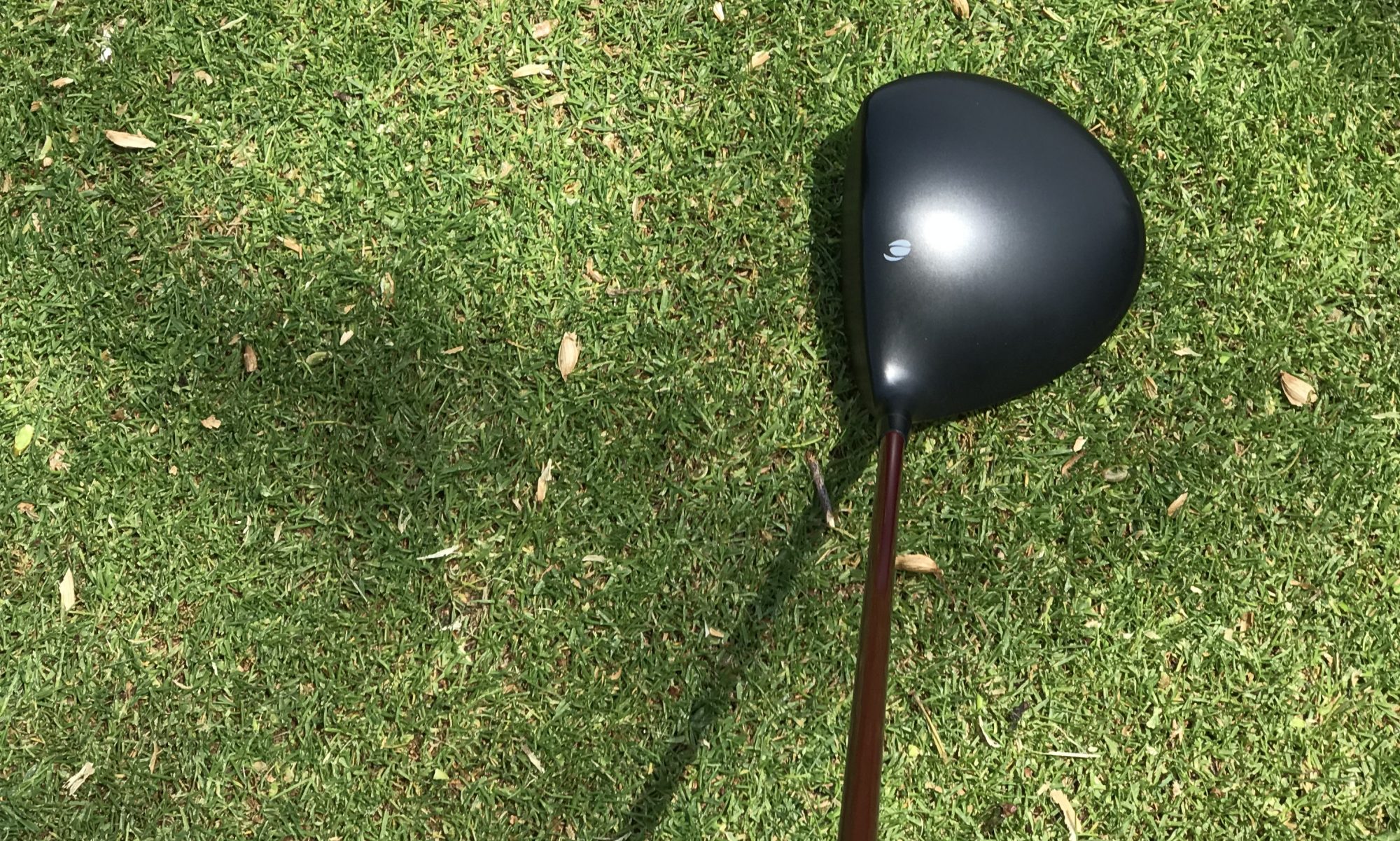
Golf: Revisiting Grip Pressure, Overswinging, and Starting The Downswing.

I wrote these three articles about 2 to 3 years ago and they remain my most popular blogs, especially the one on grip pressure. The overswinging blog was titled You Cannot Overswing and the blog on starting the downswing was Maybe Sam Snead Was Right After All. Snead had a unique thought on how to start the downswing which was mostly criticized by other golf instructors. Over these last 3 years I haven’t really changed my mind, but I thought it might be time to clarify a few points in each area and even strengthen some points because there are still instructors out there that teach a different philosophy that in my view hurts the average golfer more than helps. All three subjects are what it takes to hit a golf ball consistently. A most important aspect of the address, the grip, how to make a backswing, and the first move in making the downswing. If you can do these things correctly then your chances of making solid contact with the ball increase dramatically. Unfortunately, golf instruction has some strange ideas on these subjects, especially the first two, which makes learning the game very difficult. They are not as far off on starting the downswing mainly because there are as many ways to start the downswing as there are body parts. What makes this difficult at times is that the methods used will work, it just boils down to finding what might work for you. This is different when it comes to the grip and backswing, because what most golf instruction teaches is wrong. So, let’s dive in.

There are way too many endorsers of the light grip. I saw a recent video aimed at senior golfers that said it is very important to start with a light grip. They say that your grip will tighten up automatically when you start to swing. What happen to constant grip pressure during the swing. Most of the older instruction books write about having a firm grip. The pressure points are the middle two fingers of the right hand and the last 3 fingers of the left hand. All of this light grip stuff started because some beginners take a death grip on the club. To put a number on it, let’s say that 1 is the lightest you can hold the club and 10 is the tightest you can squeeze the club. In order to grip the club with the correct firmness I would put a number around 7 to 8 depending on the shot. 8 for the driver and longer clubs and for hitting out of the rough no matter what the club. If you don’t want the club closing over out of the rough, you had better firm up those last 3 fingers of the left hand. For all short shots and short irons I would say it should be closer to a 7. It is perfectly fine to work your fingers and have some hand movement before the shot. Just before you start the swing you want to feel that the hands are firming up and ready to control the clubhead. Your hands are never going to be able to react to the movement of the swing, especially at the point of contact with club accelerating at full speed. You do not need to choke the life out of the club, no pun intended, but you do need to take full command of the club and the clubhead. There is no way you are doing this with a light grip. If you played these sports think of how you held a baseball bat or a tennis racket. Be the firm handshake, not the dead fish.

I still believe that you cannot overswing. However, you do have to do two things at the end of your backswing. Your weight should be solidly on the right foot, and you should feel that you are in balance. One of the biggest swing faults I see is that people take too short of a backswing. This short backswing is caused by anxiety in trying to hit the ball, and the odd feeling of turning away from your target. It does not help that most golf instruction talks about restricting the hip turn. This all started with what is known as the X factor. The X factor being the more you can turn your shoulders without turning your hips the farther you will hit the ball. The basic swing is a 45 degree hip turn and a 90-degree shoulder turn. This is a difference of 45 degrees. The goal of the X factor swing is to increase this 10 to 20 degrees. If you do this, you will hit the ball farther. Is this correct. Absolutely. Will you be able to play golf well into your 70’s with this method. Probably not. A big hip turn is essential if you are going to minimize the wear and tear on the body. I feel the hips should turn at least 45 degrees and you should try to turn them anywhere from 60 to 70 degrees. The great Bobby Jones had a huge hip turn. None other than Jack Nicklaus had a big hip turn. He even raised his heel off the ground to ensure that his hips were turning quite a bit. Once you start making a big hip turn you will really feel your swing loosening up and become more fluid. The only danger of making a big hip turn is that as you turn toward the 70 degree mark, there may be a tendency to throw the body toward the left side or on the left foot. Make sure you maintain the weight on the right foot at the top of the backswing, and you will be hitting the ball in an effortless way. You will not be stretching the left side of the body to its limits, causing damage to tendons and muscles. Try a big hip turn backswing and let the body heal from restricting those hips.

All right, we are at the top of the swing. Now it is time to start down and make contact with the ball. There are many correct ways to start the downswing. None of them are wrong. As a player you need to find the one that works for you. However, you don’t need to be a slave to any of them. If one of them does not seem to be working, then go to another one. Before we get to all the ways to start down, let’s look at what Sam Snead said. He said that the best way to start down was to think about pulling a rope down that was attached to a church bell. Snead was really panned for that idea because as golf instruction developed and video came into use, the lower body became king as the way to start down. The idea was to keep the hands out of the picture until the last minute when they would release for a powerful smash right at the ball, but not any sooner. What Snead did not emphasize when he wrote about this, is that the hands need to start straight down form the top. All of a sudden you see this being advocated under the heading of the gravity swing. When you get to the top drop the hands straight down. The difference is, Snead used the word pull, and now people are talking about letting the hands just drop. To me this indicates a more passive move to start the downswing, where Snead’s words of pulling the hands down is more aggressive. It is a matter of semantics but there is no question this is what Snead was telling people to do 65 years ago. There are other effective ways to start the downswing. I am going to briefly mention a number of them without any explanation. If you want to read more about them, you can look them up. They all can work. Straightening your left leg. Kicking your right knee toward the ball. Raising your left shoulder. It helps if you are thinking of lowering your left shoulder during the back swing. Bump your hips to the left before turning toward the target. Just shift you weight to the left foot before starting down. Falling into the lead foot. Unscrewing your backswing with the legs and then firing the shoulder away from the body. Moving the core forward then increasing the arm speed. Lots to choose from there and none of them are bad. However, none of them are going to give Snead’s method of starting the downswing a thumbs up. Believe me it is another effective and yet very simple way to start the downswing. It is a method you should definitely try.

Favorite People

Daily writing prompt
Who are your favorite people to be around?

My favorite people to be around is my daughter and her family, including her extended family. When I go out to California to visit them, I could not have a better time. There is the old saying you can choose your friends but not your relatives. If I could have chosen them, I would have in a heartbeat. Everything is upbeat and we just have a good time. I don’t know how else to put it. My next choice is to be around people on the golf course. People I would do little else with I enjoy playing golf. Now there are exceptions both ways. There is one person I knew, who off the golf course was about as personable as anyone could be. He told great stories, seemed to be upbeat about anything and was just a great guy to just hang out with. Once he got on the golf course it was a different story. He would become upset at the least little thing. He could shoot a score of close to par or right at par, and you would have thought he shot 90, the way he behaved. Needless to say, as much I liked this guy, we no longer play golf with him. I enjoy being around anyone who likes to have a lively discussion about sports, especially golf, football, and baseball. I enjoy being around people at the neighborhood bar, even though I might not interact with them. I just like to be around people who seem like they are having a good time eating and drinking. I like to be in that noisy chaotic environment every once in a while. I love to go to concerts to feel the electricity and excitement before the main act comes out. I can feed off all of that, to feel an energy lift through my entire body. I enjoy being around people that are all rooting for the same sports team. I know that it can’t happen all of time, due to unfortunate circumstances, but any situation involving people that can lift my mood, I love to experience. The nice thing is that happens every time I visit my family.

Golf: Mystery No. 3, Why Things Work, Until They Don’t

A thing is defined as an object or entity not precisely designated or capable of being designated. I think thing is the perfect word for what we try on the golf course to get through a round of golf. Those things may include swing thoughts, swing methods, various address positions and mental processes that we think will either get us through a round of golf or improve our golf game in general. In fact, it could be any combination of these things, that one could use to suddenly improve their ball striking abilities. Putting is an even more fickled activity. There are endless ways and techniques that are described in putting. One of the amazing things about all of this is that we are not the only ones doing all of these different things to try and improve are games. You hear about pros changing their swings all the time. They are putting one way one year and then another way the next year. Vijay Singh has won three major championships in 1998, 2000, and 2004. In each of these majors, he won with a distinctly different putting method. From this point on I will go back to calling all of this, things again, because I do not think it makes any difference which of the things we are discussing. They all have the same thing in common. They work for a while and then they don’t, so we go to a new thing. Sometimes we will go back to an old thing that we may have used years before and gosh darn it, it starts to work again. Alas, over time it quits working. Let’s take a look at each part and see if we can unravel this mystery. No spoiler alert here, we don’t but I am going to proceed anyway with lots of theories. I will look at each part, why they may work, why they quit working, and is there any alternative.

Even though I am putting all of these things under one heading there is one of these things that is a little bit different. Swing methods are more of complete swing techniques, where all the other things could be looked at as band aids or quick fixes. Ah yes, good old swing methods or systems. There have been many over the years and I am not going to mention any of them because they all suck. They are associated with some well-known instructor or player and have lots of testimonials. This is what you might call the long version of all the other things listed above. You decide to try one of the methods and give 100% to it. You practice, you make the changes in your swing, and this is what happens in any system. At first there is some back sliding. You’re getting use to new swing and pre-swing techniques, but after x amount of time and rounds, things begin to click. You feel you are hitting the ball better and your scores are even coming down some. What eventually happens is your game goes back to about the same level it was when you started the new system. You will see this with tour players when they change swing coaches. There is the period of adjustment, the supposed break through happens, but then they wind up with pretty much the same record they had with their old swing coach, over the same time period. The band aide treatments just do all of this in a much faster time frame, sometimes in the matter of a few holes. Change your grip, stand taller, stand closer, be more relaxed, change the waggle, speed up your tempo, slow down your tempo, be more rhythmic, finish in balance, swing easier, swing harder, make a full backswing, smooth transition, and finally who gives a shit. Then there is the mental game of picturing the shot, visualization, positive attitude, keeping your cool, not reacting to bad shots, playing conservatively, playing aggressively, letting go of bad shots, making the correct adjustments to the conditions, and finally who gives a shit. Like all of the methods, these things work until they don’t. They usually stop working quicker and rarely make it to the next round. These are facts Jack but why does this happen. I will be damned if I know but here are some theories that are probably worthless, but I don’t care.

We are all trying to improve, God love us, but most of these things are tried because at least in our own minds our games are actually getting worse. If we shot our handicap every time, I am not too sure we would be doing any of these things. Right now, my index is 5.7. If I shot below 80 every time, I think I would be fairly satisfied and would just go ahead and swing away without a care in the world. In my last 20 rounds I have had 6 rounds in the 80’s and one as high as 88. I have had some horrible ball striking rounds. I have tried all of the quick fixes with some really good results. I am way past trying any system. I know better than that. I feel the quick fixes work because they distract me from what is causing my horrible ball striking day. Sometimes what is causing this may not even be related to golf. Regardless, once I make a change then I get a new feel, whatever that may be, and I immediately start hitting the ball better. Now once if a while, just to make things interesting, I will do something different and continue to play poorly. I usually give it about 2 to 3 holes and then try something else. Some rounds I never seem to make any progress. Another way to look at this is to say none of these things really work, even though they seem to. Changing some relatively minor aspect of your swing should not make all that big of difference. Maybe doing something like that triggers some neurologic pathway that allows you to swing better and that in turn causes better ball striking. The reason it stops working is that this pathway had nothing to do with the poor ball striking and simply loses its effectiveness due to repetition. All of this goes against the idea that we are supposed to groove our swings, so we can repeat our swings on command. There is the adage that you can have a flawed swing if you repeat the mistake all the time. That is why you practice, to groove that swing.

There is no doubt that this is the biggest mystery of the game. It could be summed up in the following way even for the beginner; learn, success failure and repeat. If you look at tour players who have had success and then lose it, never to see their winning form return you could say the middle step disappears. For those of us who have never reached such great heights, the middle step does always happen, it just may be for a very short time. For all the things that I have done to my swing, and it ranges into the 100’s believe me, I have had a few that last a full season, but most don’t last for a week. Maybe we should just swing the way we feel most comfortable and to hell with results. Just accept the fact that you will have good days and bad days on the golf course. Sometimes the bad days stretch out over weeks. When that happens, it is extremely hard not to try and do something. Tucking my right elbow right into my side, I bet that’s the answer. What do you think? Thank God it’s January and I don’t have to think about it for the moment.