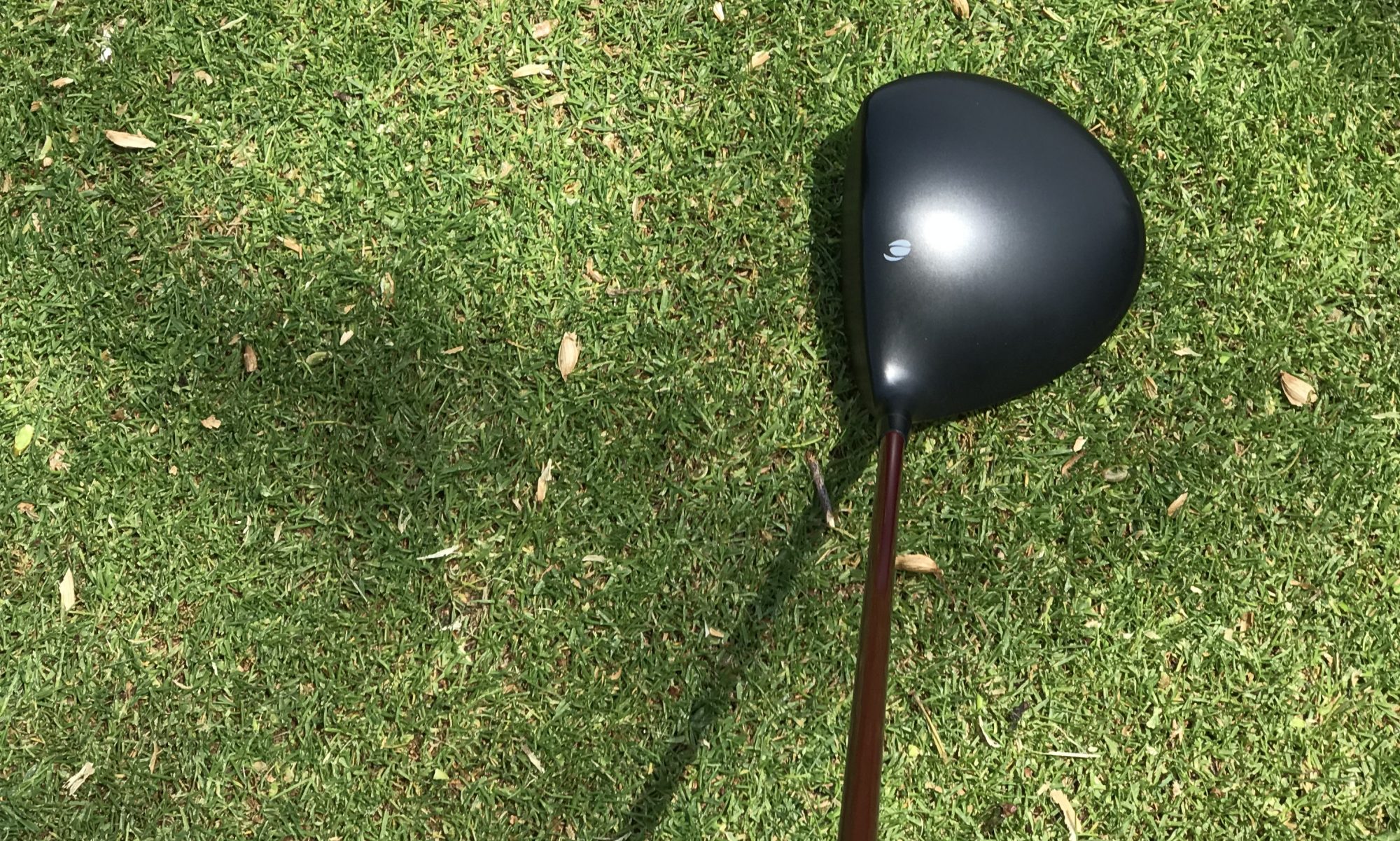
Golf: Playing The Game, Part 2

In part 2 of playing the game let us look at the type of shots you need to execute in order to play the game, when to apply them and what to do if you cannot. There are four shots you need to do in order to play the game well. You need to hit the low shot, the high shot, the intentional draw and the intentional fade or cut shot. This is not going to be a how-to article. There are plenty of places you can go online to see how to hit each shot. There are many methods and they all will work. Each player needs to find a method that suits their game best. What this blog is going to be about is when to hit these shots, and the mindset you need to have in order to play the shots. I am going to take the shots in order of difficulty starting with the easiest and finishing up with the most difficult.

Hitting the ball low is by far the easiest of these shots. It is the go to shot on a windy day. In fact, you might want to play the low shot even when playing downwind. Most people would think that you want to hit the ball high when playing downwind. This is true when you are driving the golf ball. However, if you are trying to hit the ball a certain distance then keeping it low is still the way to go. Wind is so unpredictable you want to keep the ball down out of the wind if at all possible. If there is a bunker or a ditch in front of the green, then you will have to go high on the approach shot to the green. Depending on how far you are from the green it still may be better to hit the low shot a little right or left of the green. If the green is open in the front and you are playing on a windy day going low is the best way no matter which way the wind is blowing. You also need to go low if you are too close to trees that you cannot go over. At times when you have to go really low don’t hesitate to hit the driver off the deck to keep the ball low and have it go a fairly decent distance. Even though it is the easiest shot of the group, it is by far, the most important shot of the group. If you are ever going to reach your potential on the golf course, you must be ablet to play the low shot. Go out and find a method and then practice that method until you can hit a low shot with 100% confidence.

The high shot is the next necessary shot if you going to play golf well. Going over trees and bunkers to a green will come up every once in a while, during a round. If you are close enough to the green the high shot takes care of itself because of the loft of the club. There is more skill required if you are trying to hit a fairway wood up to about a 7 iron with some height and maintain the distance. The most dangerous of the high shots is when you are trying to go over trees. If possible, it is always better to go low around or between trees rather than try to go up, unless you have a high skill level on hitting the ball high. The high shot comes in handy but do not overdo it. Most of the time you are better off thinking low rather than high.

Next, we come to working the ball, hitting left to right or right to left. The left to right shot is the easier of the two to hit. The fade or cut shot is a great control shot and has many useful applications during the round. There is one cardinal rule, never curve the ball toward trouble. If there is more trouble on right of a hole than on the left do not hit the fade. The next rule which should be obvious, but most players do not seem to want to do this, is to aim left. If you are going to move the ball from left to right, you have got to give yourself enough room to aim the ball to the left so it will move back to right and end up in the fairway. This is the shot that you can swing fairly hard at. The harder you swing, within reason, the ball will have a tendency to move left to right. You don’t want the ball to curve toward trouble, but you don’t want to have to aim at trouble in order to allow the ball to curve back to the middle of the fairway. There will be times when the best shot to play is fairly straight.

The hardest shot to hit is the draw or the hook. There are situations on the golf course when the draw is by far the best to play. Anytime you want more distance, and the course is wide open, the draw is the shot. When you want an iron to have a little more distance the draw is the shot. A pin on the left side of the green where you can aim to the center of the green and let the ball work toward the pin. This is another shot where you must commit by aiming far enough to the right to allow the ball to work back to the center of the fairway. Draws are harder to control because they will roll further and at can easily snap into the dreaded duck hook. In the execution of the shot, you must swing easier to create the right to left movement that you want. Overall, the draw is not as intuitive as the fade. The rules are the same as they are for the fade but even more so when it comes to not curving the ball toward trouble. This particularly needs to be worked on at the range if you want to try and incorporate it in your game.

I think that anybody with a reasonable game can hit the ball low. It requires a little more skill and guts to hit the high shot in certain situations. Working the ball in different directions takes a lot more skill, time and effort to perfect. So, what are you supposed to do if you lack any of the three. Your game will have to be compromised but it does not mean that you cannot score to your full potential. Every golfer has a certain flight pattern to their normal shots. If your shot pattern is generally left to right, then you have to be more conservative when there is trouble on the right. You should never go flag hunting on pins that are on the left side of the green. If your game is off, you may need to swing a little harder than you normally would. It is the exact opposite for players who have a tendency to draw the ball. When your game is off you may need to swing a little easier. There is advantage in being able to work the ball but is not a game ender for those of you that don’t. For those of you that don’t work the ball the plan for every shot should be low, high, or normal. Always think low when the hole is tight and there is trouble on the right and the left. The final thought should be aggressive or conservative depending on how the hole sets up and where the pin is located. For players that work the ball the addition of right to left or left to right should be added. Playing the game of golf simply means playing to your strengths, avoiding problems until you reach the green or the green area. Once you are there the fun begins. It’s called putting. I will tackle it in the next blog.

Golf: Playing The Game, Part 1

We take lessons, we watch videos, we get fitted for clubs, and we practice. After all that we go to the golf course and we have to play. Sometimes I believe all the things we do in preparation for playing is a subconscious way to avoid playing. More often than not after going through that process we seem to fail miserably on the golf course, and it is very difficult to improve. What is it about this game that seems to bring out the worst in our abilities? I admit I do not take lessons, and do not practice. I did get fitted for clubs, a set of irons once. I do watch instructional gold videos. Even though my game has not gotten any better I have not seen it decline either. If I could get a stroke for every time I have heard about how great somebody hit it on the range and now, they can’t hit the ball at all, I would break 70 at least 25% of the time. Today let’s look at some general things that go wrong when we get on the golf course and actually play the game.

The first problem is we are thinking about our swings rather than thinking about the purpose of the game and that is to get the ball into the hole. This immediately sets up a conflict between the body and mind. The body wants to perform a particular function, and the mind wants to get the ball in the hole. This leads to the basic problem of swinging too hard. There are other factors that lead to swinging too hard. We do not take the time to get a feel for our swing at the beginning of a round. Add to that the anxiety of trying to keep the ball in play and we get an overall tightness of the muscles which makes them harder to move and allow the club to flash through the hitting zone. On the 1st tee you must immediately get into play mode and think about where you want the ball to go. Whatever you were working on should just take over naturally. Start a round out slowly and conservatively until you get a feel for the round. Always take an extra club on the first hole. Allow your swing to have a mind of its own so to speak. It will gradually want to speed up as the round progresses and just let it do so. The main thing to remember is to stay in balance as much as you can.

When we start to play golf, we become way to conscious of our score whether it be good or bad. This mere fact of not knowing what your score is separates the men from the boys. First, we will look at the hot start. You play the first 6 holes much better than you usually do. You begin to put more emphasis on the results of each shot from that point on. You must get back in the mode that enabled you to get off to the good start in the first place. Part of that good start had to be related to making some nice putts. There is nothing from stopping you from making more. Conversely if you get off to a bad start over the first 6 holes you have to push through that and continue to think about how and where you want the ball to go. A lot of times bad starts can be related to poor or unlucky putting. Remember, all it takes is to make one putt to get the confidence back and make up some ground. You will never know when the big comeback is going to happen if you never give it a chance.

The final problem when playing the game is not adjusting to conditions and not being able to hit the shots that the conditions require. The shots themselves I will discuss in future blogs about playing. Most players think that not adjusting to conditions is only associated with conditions that are considered bad. Conditions that are considered ideal can get you into trouble if you are not paying attention. The types of conditions golfers play under are as varied as the weather. I have always been amazed at my own game when I shoot a really good score under way less than ideal conditions. It could be rain, cold or wind and I will sometimes shoot a round in the low 70’s. I often think that I don’t shoot that good a round when it is sunny, 80 degrees, and no wind. I think the reason for this is that when conditions are not that good, we start to think and plan better, and our expectations are low. When the conditions are ideal, we forget about how far a ball can roll into trouble when compared with very wet and soft conditions. Usually in the summer the greens can be faster, so it is more important to stay below the hole and avoid downhill putts. One of the toughest conditions to play in is when it is windy. All of these things add up to make the game more difficult to play, than practice. Playing the game can be very frustrating. Over the next 3 or 4 blogs I will cover certain aspects of playing the game. The main goal of any golfer should be to play to their maximum ability. It is a lot tougher than it sounds.

Golf: Why Is It So Hard?

It looks like the surge in golf play due to the Covid pandemic may be coming to an end. It’s too early in the year to evaluate how many people will be playing golf. However, I base my opinion on a visit to a local golf repair shop. This shop takes used clubs on consignment and sells them to the public. The last two springs have been pretty slim pickings because of many people either taking up golf for the first time or playing again after not playing for many years. During the height of the pandemic, golf was about the only thing you could do. The last two summers have seen more play than normal. There were what I called Covid foursomes. These were beginning players that had no idea how to play or what the game was all about. I visited the shop last week to get a couple of grips put on my clubs and the used club racks were filled to the brim. There were more clubs there than I have ever seen and I have been going there a long time. The fact remains that many people take up the game of golf, and after a year or two of playing, will quit the game. There are other stories of people who have played the game for years, and then after being so frustrated with their games, finally just throw in the towel and quit for good. What makes this game so difficult? I have always been hard on golf instruction, for not being very good at teaching the game and this is, indeed, a factor. There are, however, several things about golf that has nothing to do about trying to hit the golf ball, which makes the game unique, but also very difficult. Winston Churchill may have summed up golf best when he said, “Golf is a game whose aim is to hit a very small ball into an ever-smaller hole, with weapons singularly ill-designed for the purpose”.

The first thing that makes golf so difficult is you are trying to hit a target with an object, and you are not able to look at the target. This is not lost on all of instruction. Some advocate that you look at the target and as soon as you look back at the ball you start your swing right away without delay. This sounds all well and good, but you still really have the same problem, you are not looking at the target when you are in the act of trying to hit the target. I feel this is even worse than trying to hit a target with your eyes closed. Think of any other situation where you are trying hit a target. Every time, you are looking at the target. I am a little surprised that putting while looking at the hole is not more popular. Tennis is similar, but the target is in the same place and distance every time. There are 18 times in golf, that you hit the ball off the tee ground. On a golf course that has 4 par 3’s, 4 par 5’s and 10 par 4’s, that means that the other 18 full swings will most likely be totally unique shots. Not only will they have different distances to the green, but the lie of ball, the lay of the land, and the environmental conditions will all be different for all of those 18 shots. Let that one sink in for a while. In fact, I am thinking about it, and I think I will quit the game. What kind of swing are you going to groove for those kind of shots? Let me clue you in, you are not. You are going to have to make 18 adjustments for 18 shots during a round of golf. If you do not make those adjustments, you will hit the ball thin, fat, left, right, short or long of your target, depending on what adjustment you failed to make. Some shots, you may have to make 2 or 3 adjustments from your normal swing. The more slopes and hills a golf course has, the tougher all this becomes. Even if you have played some relatively good to great shots, you then have to deal with the nightmare called putting. Putting has nothing to do with the golf swing. Putting is to golf like a bowel movement is to eating. You have to do it but it is not near as enjoyable as the first part. Putting can save a hole or ruin a hole with no in between. Other than a club face coming in contact with a ball, putting has absolutely nothing in common with the process of hitting a golf ball. There are entire books just dedicated to putting. The worse part, it looks maddingly simple. Finally, there is the way that golf can just play havoc with your mind. It can get to the point where your body just simply does not function. It would be like putting a fork in your eye when you are trying to eat, or pouring something into a glass and missing the glass completely. In a nutshell, golf completely controls your being. It can be the scariest thing about golf and would make anybody quit the game.

If you continue to play the game after reading this, is there anything you can do to try and make such a powerful game more enjoyable. The short answer is no. Resignation may be a better word to use and cultivate when trying to play golf. What makes golf a great game is that everyone wants to help each other, even a competitor. Golfers seem to root for their fellow golfers. The game is the definition of good intentions. However, there is that little devil inside of all of us that does find some pleasure when the greatest players in the world hit some of the worst shots ever known to man. When those same players miss that 2-foot putt with a twitch of the putter that they could not possibly duplicate on the practice putting green, you shake your head and think it happens to them, too. Even though these players are millionaires, golf still makes their bodies do things that they just can’t believe and did not think was possible. This game is hard, and technique has nothing to do with it.