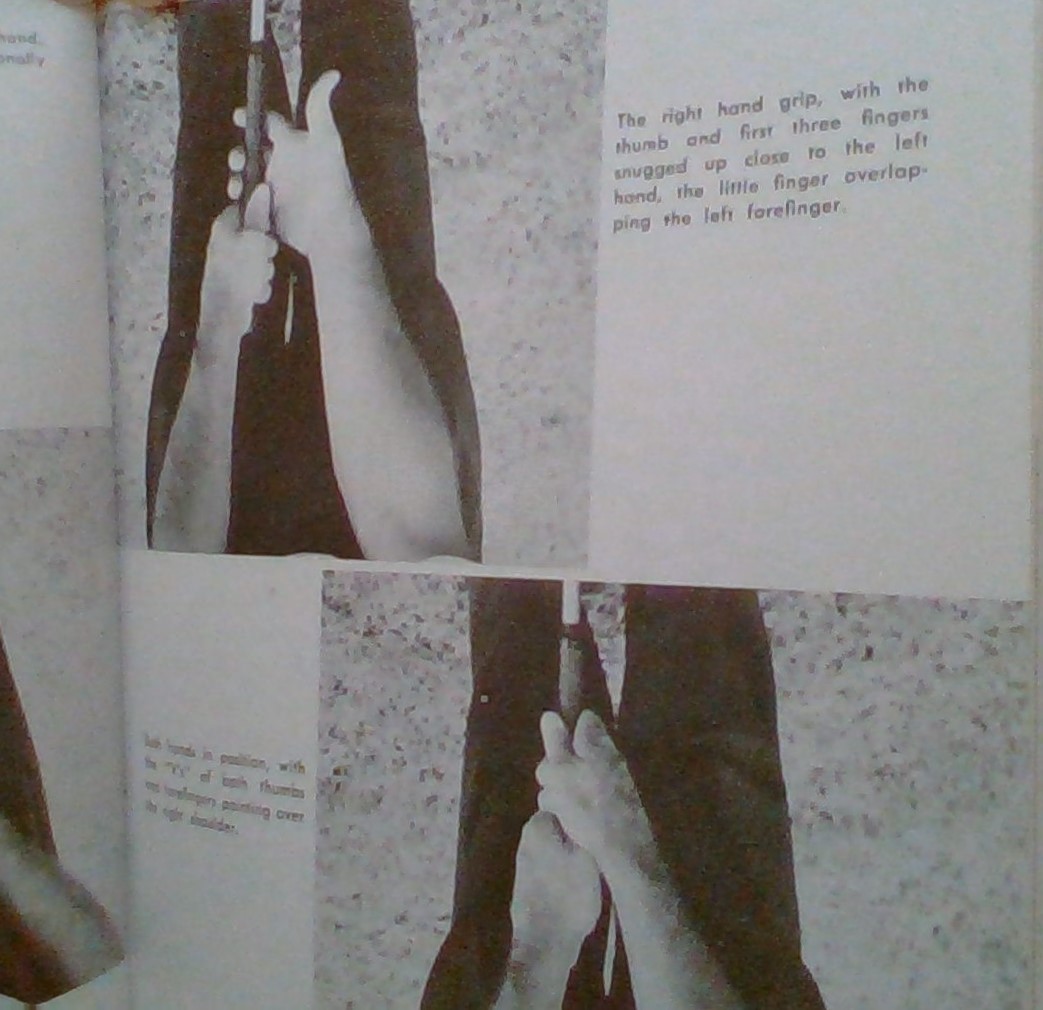
If this blog had been written about 30 to 40 years ago, this fault probably would be in the top 3. The grip is fault no. 7. Still not bad, but for different reasons. A bad grip would be something you would see all the time back in the 80s. You do not see as many today. I do not know if that is because of the internet and all the pictures you can see of the grip today. Speaking of pictures, if you want to see the very best grip, just look at Sam Snead’s grip below. For all the admiration of Snead’s swing, he had one of the best grips of all time. Gripping the golf club correctly is still an awkward thing to do because there is nothing like it in other sports where you have to grip a handle. Baseball, tennis, ping pong, hockey, and today pickleball all grip the handle of their sport differently than golf. For whatever reason, people seem today to be able to overcome the uniqueness of the golf grip. However, there are some things about the grip that people either refuse to acknowledge or understand how the grip can help your game quite easily. The grip can help you correct the curvature of your shots. The other misunderstood aspect is grip pressure, or how hard to hold onto the club.
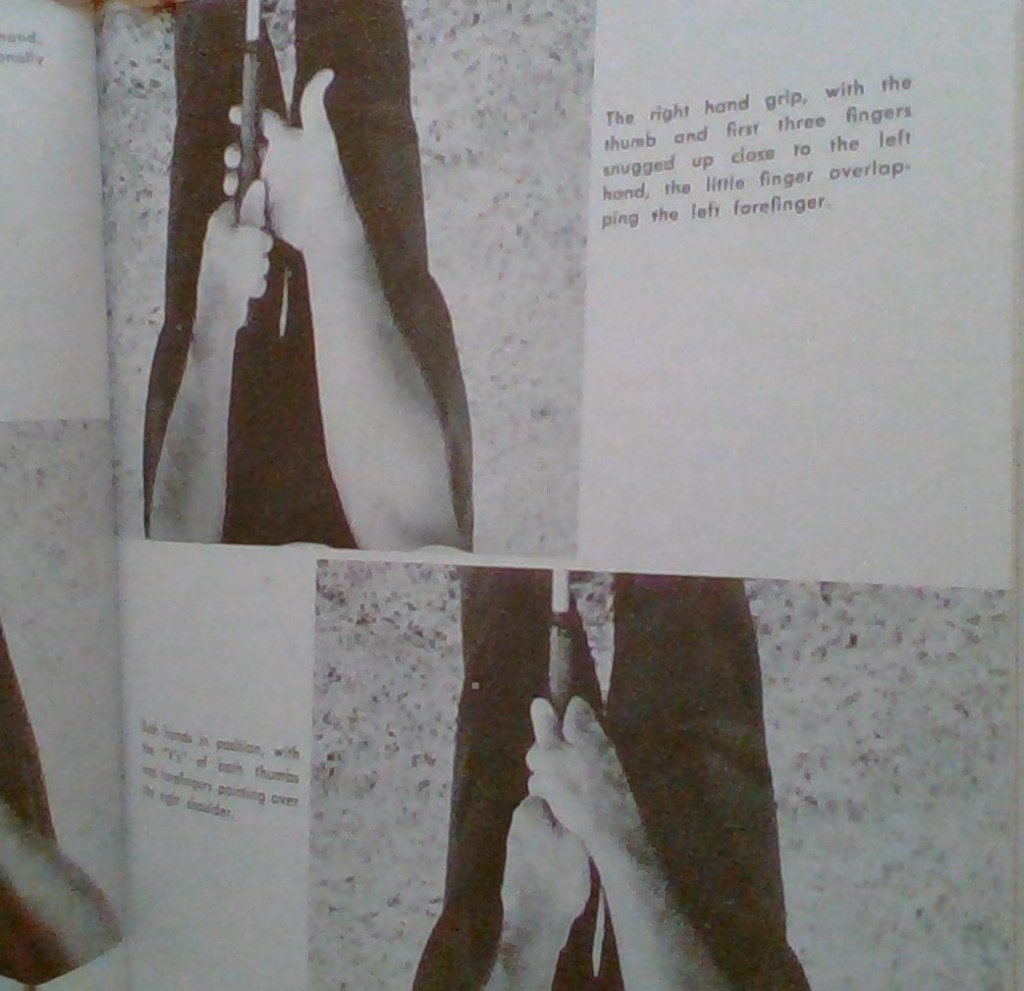
I have written about grip pressure before, but to briefly summarize, most of the time players do not hold the club firmly enough. If you play other sports that require holding a bat or racket, like baseball and tennis, then you should apply the same firmness that you do in those sports. If you read any instructions about the grip, there is almost always the word firm in the instructions. Where we have gone astray here is the fear of the so-called death grip on the club. Because of this, we often see the advice to grip the club lightly. Along those same lines, instruction will say that your grip will tighten naturally when you start the swing. I do not think this is the best way to handle grip pressure. The old advice about gripping firmly with the last three fingers of the left hand and the middle two fingers of the right hand is, in my view, the way to go. I think it is the only way to develop consistency in making contact with the ball. Firm is the thought you want to have, not squeezing with all of your might. You need to feel that you have control of the club, and you are not going to feel this way with light pressure on the club.
How you place your hands on the club can help you control the curvatures of your shots. You hear the terms neutral, strong, and weak when it comes to the position of your hands. Let’s just forget about those terms for the moment and concentrate on the palm of the right hand and the back of the left hand. The starting point for a grip should be that the palm of the right hand and the back of the left hand are pointing to the target. If after using that grip for three or four rounds your main problem is a slice, shots moving from left to right with too big of a curve, then you should turn your hands to the right about an inch or two. This will put your right palm and the back of your left hand looking left of the target. This should help you square up the clubhead at impact. If the opposite problem exists and you are hitting those right to left hooks that are traveling way left, then you can turn your hands to the left. If your starting grip is truly having your palm and the back of the left hand looking at the target, you will not be able to turn your hands to the left very far, maybe just about 0.5 to 1 inch in that direction. Even that small of a turn should help in keeping you from closing the clubhead. Hooks and slices can be caused by other swing faults, but until you start moving your hands on the grip, you will always be fighting the way your hands and wrists want to perform during the golf swing. Just watch the pros’ grips on TV or YouTube. You will see many positions of the hands on the club. There are certain principles of the grip, but exactly how you place your hands on the club is not one of them. How your ball is curving will dictate how you eventually grip the club. Don’t be afraid to try different positions. The pros sure do.
 The Goofy Game of Golf/Life Searching for the Answer