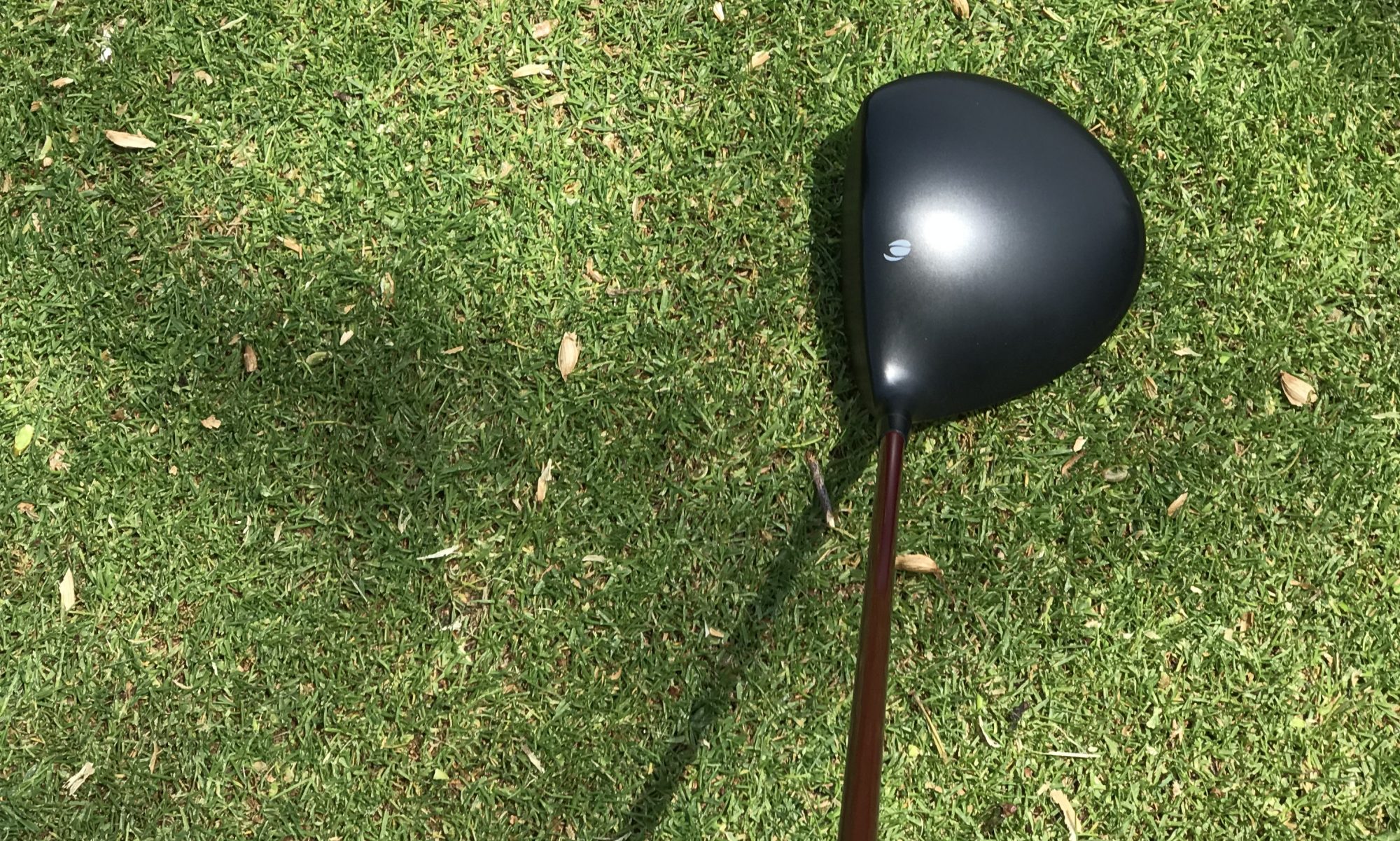
Golf

Golf, the game for the masses, that everyone can play and enjoy. You can play the game of golf until the day you die. People are playing golf in their nineties, and kids can start playing when they are five years old. It is the game for everyone, but is it. For what ever reason golf has always had some kind of unwritten caste system. There is really never an exclamation on why this wonderful game became this way. Even within the game, there was this elitist attitude with the general public, when it came to golf. The golf professional was looked upon as a lower class citizen, during the first third of the 20th century. During tournaments that were held at country clubs the golf professional was not allowed access to the clubhouse facilities. Speaking of the golf professional, their organization, the Professional Golfers Association of America, had in its  by laws until 1961, that in order to be a member you had to be Caucasian. Let that sink in for awhile.

Country clubs are the last bastion of I want to play with my own kind, philosophy. The unwritten rule that many clubs would not allow minorities and people of the Jewish religion is still going on, but there has been some change recently. In the last 10 years there are more  country clubs allowing in their first African American members. There are still many all male golf clubs. There are many rules at most country clubs. Women can only tee off at certain times on the weekend, usually after 11am. The clubs try to make up for this my giving women a day like on Tuesday from 8 to 11 when they have the priority. WOW. There’s the men’s grill, and other rules and regulations that do not exist in what I would call the real world. The justification for these attitudes are we paid a whole lot of money to belong to this club and we will make the rules and play with who we want to play and associate with. If this has been the policy  for years to exclude minorities in country clubs and treat women as second class citizens, why has there been this gradual change to begin to open up the doors to a more diverse group of people. We all know it has nothing to do with a change in social consciousness or attitudes. It has to with $$$$$$$$$$$$$$$$$$$$$$$$$$$$$$$$$$$$$$$$$$$$$$$$$$$$$$$$$$$$$$$$$$. Yeah, no kidding. The country club world is hurting, and now needs more members to enjoy all those restricted amenities. This is all well and good. If this leads to more minorities being able to play and enjoy some of the finer golf courses that this country has to offer, great. If this leads  to better treatment of the female golfer, wonderful.   I am sure we may see more  of these positive changes as the golf economic crunch continues.  

This has been going on in golf for years and years, and I am not going to make judgements, or go on about golf’s apparent lack of social conscience.  My question here is, how did this simple game of knocking a little ball around to put it into a hole, develop  this elitist attitude. I am not sure, but here is what I think.  As golf became more popular over the years there was one thing discovered about golf when compared with other sporting endeavors.  Golf could humiliate you like no other sport could.   It’s so simple and looks so easy.   But when you miss that first 15 inch putt, make your first whiff, or take 10 shots to try and get out of a sand trap, before just picking up your ball and walking sheepishly to the next tee, you know that there is something wrong with this game or maybe it’s you. Now it’s bad enough to do this in front of your friends, but to do this in front of strangers, or in front of people that you perceive is  below your so called social standing, is even worse, and adds to the humiliation.  The solution is to simple keep them away, and play with your own kind, to suffer the shame with your dear friends, who know what you are going through. Let’s face it, humility is not one of the traits of captains of business. Golf is simply that game that brings out the worst and the best, out of everyone.  It is too mystifying to be believed, and impossible to explain to someone who has not been through it.  It is this lack of understanding of golf, that has led this great game to develop this caste system. See you on links.  I will be the one walking with my head down while shaking it from side to side.    

100% Mental Golf: Rounds 48 through 67

Have not blogged for about 6 weeks, and that usually means things are not going all that well.    Things are not going great, as my index has inched up to 4.8, but there have been some other circumstances that have made this a bit of a blog drought.  So let me count the ways.

First, I have gone though a major equipment change.   I have gone with graphite shafts in my irons and have gone from stiff to regular.   The irons I have now are the Titleist AP 3 irons 5 through the gap wedge.  The “gap wedge” is 48 degrees and the rest of the clubs are strong lofts too.  The irons are investment cast, and I have always been a forged guy.  I hit these irons freakishly long and that has taken some time to get use to.    I have also gone to a regular shaft on my Driver and 3 wood.  My 5 wood still has a stiff shaft but I have not gotten around to get a new 5 wood yet.  My only steel shafted clubs now are a 54 degree Volkey Wedge and 58 degree  Calloway wedge.    I acquired a 51 degree gap wedge with the same graphite shaft.  I call it gap wedge II.   I don’t know why I am getting so much distance with these irons.   The clubs are about what I would call about a half a club stronger than normal.  I would consider my 5 iron, a 4.5 iron.  My normal 4 iron distance would be about 200 yards but that would be a true solid hit.   Now my 5 iron carries about 205 to 210.  Could be the shafts or the club head.

Second, the weather is still terrible.  There is not one thing you can do about it, but it is discouraging.  Most golf courses are a mess.  It’s not their fault but we have had more rain in the last 11 months than probably in history.  Since last August 1 we have not gone more than 5 days without rain and a lot of those days we have had heavy rains.  Its tough hitting shots where you would just walk up and find it, but now it is hard to find the ball because the grass is so long. I admit, I try not to let this get me down, but I have never experienced this before, for so long and I have been playing since 1958.  You can only say it is what it is, so many times and there is no end in sight.

Third and probably the most important, I have not really been 100% Mental all that much over the last 5 weeks.  I hang my head in shame.   This is one of these things that is hard to explain,  so I won’t really try.   When you are not getting the desired results, it’s almost impossible not to try something different with the golf swing.  The other thing about 100% Mental Golf is that it can be quite difficult to keep the concentration level up over the 18 holes of golf.  I don’t know if golf was meant to be this hard.  Putting has still been a problem  with luck not being on my side much.  On the plus side my last 3 or 4 rounds have been pretty good.  I can honestly say over the last 2 rounds in particular my short game has evolved to average.   That is a huge jump for me and we will see how long that lasts, and if that may improve.   In the next few weeks I will see how some of these physical changes I have made work, and see if the putting can get better.  Should be playing 3 to 4 times per week until the beginning of August when I take a little 5 day vacation to the beach.   I am not sure I should be that close to the ocean, depending how things go on the golf course.  Will blog again in about 8 or 9 days.

100% Mental Golf: Rounds 20-26

Played seven rounds of golf since the last blog, and I am floundering a bit, and it may have been because of the last blog.  Lets get to the numbers: Fort Cherry 85   Scenic Valley 78   Ponderosa 77     Fort Cherry 79    Scenic Valley 77    Ponderosa  78    Scenic Valley  78.  Other than the horrendous day at Fort Cherry  the rounds were obviously consistent. If I wanted to be hard on myself, I could say, consistently lousy.  The weather was not great, mostly dark and dreary with some rain here and there, cool temperatures but with little to no wind.  The weather was not the issue.  The Fort Cherry round was a total disaster but I managed to right the ship to the point of making 5 pars and 2 bogeys on the last 7 holes.  Fort Cherry’s par is 70 so I was 13 over after 11 holes and everything was bad.    The rest of rounds were ok  with the normal things from keeping me scoring better.  We all know them.  Putting and short game, with some bad decisions mixed in.

What does the last blog have to do with all this?   I wrote, does 100% Mental Golf mean you totally ignore the physical side of the game.  My answer was no and I explained that I was making sure I was turning my body on my swing and gave this credit for my really good round of 75 at Scenic Valley.  Four days later I follow this round up with one of the worst of the year.  I repeat the question.  Does 100% Mental Golf mean you totally ignore the physical side of the game?  Now my answer is yes.  Now again this is for just us poor pathetic single digit handicappers who are stuck on the number.  How to get to a single digit handicap and be miserable, is another blog altogether.   I am not going to defend this position today, because maybe it will change again, but after the last 7 rounds, I don’t think so.  Obviously turning my body did not help me at Fort Cherry.  In the last blog I made the comment that there is a difference between thoughts and feelings.  Who cares.  Neither one is worth a good crap for very long on the golf course.  It boils down to the body and mind and how they function together.  I think now that some of our preconceived ideas about the golf swing, short game and putting are not right for our own particular golf game.   I am not going to get into specific examples, because this could change  by next week.

We will see what happens over the next few rounds.   I feel there should be 3 golf books that need to be written.

  1.  How to Become a Single Digit Handicap Golfer (At Least a 12)
  2.  How to Become a Scratch Golfer or Die Trying
  3.  Putting:  Get the Damn Ball in the Hole Any Way You Can

See you next week.

100% Mental Golf: Rounds 3 and 4

This week I was able to play golf on Thursday and Friday after about a one month break, due to something called winter.   Thursday played Scenic Valley and shot 77, and Friday went to Ponderosa and shot 80 where the weather and golf course conditions were a little tougher. At Ponderosa, we had a lot more wind and the golf course condition was very wet with the greens being very soft and slow.

The Good:  My ball striking was very good, considering the layoff.  I drove the ball well and my iron play was good.   I struck the ball solidly from all positions and was able to play the desired shot most of the time.   My short game continued to be more than adequate, as the early changes I made have helped.  For the most part my mental process worked fairly well and I made good decisions most of the time.

Problems: Putting was the biggest issue.  I did not putt horribly, but the best way to sum up my putting, was that I had no birdies for 2 days of golf.  I missed a couple of short putts at Scenic for pars, and some makeable birdie putts which kept that round from being a really good round for early in the season.  At Ponderosa the greens were really slow but I was ready for that, and my speed on greens was not bad but I could not get the ball in the hole.  I got off to another bad start at Ponderosa but only lasted 2 holes and some par saves on 3 and 4 helped get the round rolling a bit.   The other issue was that 2 to 3 times in both rounds I completely zoned out while hitting a shot.  My mind went completely off on other thoughts  that had nothing to do with the shot I was planning to play.  This happened completely out of the blue and at different parts of the round. Needless to say the results of the shot were horrible.   Considering  I am not thinking about my swing at all and just thinking of ball fight and shot planning it is surprising.  The definition of a loss of concentration.

Overall I was happy with the way I played during the two day.  Here is one principle, that forms one of the basic fundamentals of 100% Mental Golf.  Every golf shot is totally 100% unique.  I have stated that I do not have swing thoughts any more, which is true.  However,  I certainly have awareness as to how a certain swing feels in a particular situation.   When a shot really turns out well, that swing has a certain feeling to it.  This can be particular true on a tee shot.  The trap comes when you try to repeat that feeling on the next tee shot.   In fact this is often recommended in golf instruction to have a repeatable swing.  Believe me the shot will not be as good as the one on the last tee shot, because the next tee shot is unique from the previous tee shot.  The mind was not built to repeat, anyway.  Here is nice little test.  Get a piece of paper and make sure it is wide enough to sign your name about 5 times across.    Sign your name 5 times across the paper as naturally and with as little thought as possible.  Maybe your signature will even look exactly the same each time or there may be some slight differences.   Now drop below about one inch  each signature and try to copy that signature.  Take one look at signature for as long as you want and then right underneath the signature write it again and see how you do.  First it will take you longer to write the signature and you most likely will fail.  Part of the reason you fail is your trying to copy the exact signature.  This happens with the golf swing for even more reasons, but mostly because no two golf shots are ever exactly alike so why should you try to swing the same way a previous golf shot felt. More on that later in the year.   Hopefully a little more golf this week as the weather looks better in the middle to the end of the week.   See you then.

100% Mental Golf: The Flagstick

No golf this week, so I thought I would write about the flagstick.  Yes, that new rule this year, that you can leave the flagstick in the hole when you putt has created a lot of discussion.   These articles and videos on the subject have range from it helps 99% of the time, to it hurts,  to it makes no difference, and just about everything in between.  Some articles have many rules on when to leave the pin in and take it out.   These rules range from the type of putt,  to the distance from the hole, various conditions, and the way the pin may be leaning. Obviously the PGA tour pros have not embraced the rule change.   Only two players , Adam Scott and Bryson DeChambeu, seem to leave the pin in almost all the time.  Every once in awhile you will see somebody leave the pin in on a very long downhill putt.   But almost all the time the pros leave the pin out. In fact Justin Thomas says he couldn’t take himself seriously if he left the pin in.  I don’t even know what that means but it’s just another reason pros leave the pin out.  There have been some studies done to see if there is an advantage to leaving in the pin.

The biggest study was done by Dave Pelz in 1999 and explained in his book  Short Game Bible.  Quoting from the book ” What did I learn?  All  the evidence points to one simple rule: Leave the flagstick whenever the Rules allow, unless it is leaning so far toward you that the ball can’t fit “. I am not going through the study, but it was a very in depth study, where there were different types of greens used, and man and machine were used to role the putts. Since the rule change there have been more studies done and some have not come to same conclusions.  Here is the one limiting factor in my view of all the studies. In order to get the ball to hit the pin all the putts are rolled from a relative short distance. Pelz did not think this was all that important but I am not too sure.

When the choice to leave the pin in was only for shots off the green, my favorite golf announcer Ken Venturi use to have this well known saying, when a pro was chipping. If he takes the pin out he is trying to make it, and if he leaves it in, he is just trying to get it close.  Even though Ken was my favorite golf broadcaster, I often wondered what that saying meant and was it really true.  But it may give us a clue as to why the pros don’t leave the pin in more when they putt. My conclusion is this.   With the pin out of the cup, the hole looks or appears to be bigger than when the pin is in the hole.  So leaving the pin out when you putt again helps make golf 100 % Mental . You are going against the odds that the pin will help you when it is taken out, but most pros do it anyway because mentally they are more comfortable putting that way.

My own view on this is the jury is still out.  I am not going into great detail why I feel this way.  I feel there are some problems with the data that has been collected on this, from all sides.  I do not feel I am alone, when there have been times when I have seen one of my shots or a playing companion’s ball hit the pin and not gone in.  I immediately think that the ball might have gone in if the pin had not been in.  It’s that ball that seems to pinch into the pin, vibrates for an instant and then comes out.  For now I am leaving the pin in for all putts until I feel that it causes more misses than makes.  My exceptions for taking the pin out.  The extreme lean and if conditions are very windy. Some people are of the opinion that by the end of this year you will see more pros use the pin than not use the pin.  I think it will be at least 2 years before  we ever see that.

100% Mental Golf: Round 2

Played the second round of the year on Friday, under similar conditions with temperatures in the mid to upper 40’s with a little more wind this time.  I shot 79 but this was a totally different round than the last one.

The Good.  Ball striking was good again although not quite as good as the first round and I solved the pitching problem  with some alignment adjustments and a grip change.  When I line up for a pitch shot of 20 to 40 yards I feel that I am aiming about 4 to 6 feet left of really where I want to go.  Probably I am aiming right on, but this is my perceptions of things and I am fine with this because the results were great.  In fact I pitched one in the cup for a birdie on the 11th hole which really jumped started the round.  I got it up and down numerous times during the round. I went to my putting grip for these shots and this seemed to help. I have done this in the past with good results.  My putting was better especially the short putts.

Problems:  A horrendous start to the round.  I hit a beautiful drive off the first tee but then from there it was one thing after another.  A four putt on the first hole and then one mental error after another led to double bogey, bogey, double bogey, bogey start.  Then I slowly but surely righted the ship and even though I missed 2 rather short birdie putts on 9 and 10, the pitch in birdie on 11 got the round going, to be able to shoot one over on the last 14 holes.  One of the problems all day even as the round improve was to visualize the shot.  I could not draw the ball all day.  Early in the round this got me in trouble but then I tried to do it later where there was no trouble on the right and I still could not do it.   My mental process improved during the round as I did not make or look to make any swing changes and I started to play better.

Round 2 is in the books and it was kind of a strange round.  The wind was a factor but overall it felt good to right the ship.  When I was 6 over after 4 holes I thought maybe I was headed for a round that might not break 90.  As we were going  over to the 5th tee I was thinking, wow, this is really going to look good on blog.  100% mental you betcha, baby. There might be a possibility for a round this week but it is a toss of the coin.  See you next time.

The Goofy Game of Golf Searching for the Answe

Well, its been four months since the last blog, which is one of the longest periods in awhile that I have not blog.   I really do not have any good reason that I have not written anything for a long time.  I have been playing golf like I usually do, as this past Monday I just completed my 112th round.  My play as been ok.  In Western Pennsylvania, the handicap season ended on November 14th and I finished the year with a 4.7 index.  Which is not bad but no major improvement.   I really did not prove some of the concepts that I wrote about on that blog 4 months ago.  So today I thought I would review the last year and the last 4 months in particular.

The one constant over these last 4 months was that the weather was lousy.  In 112 rounds of golf I would say I saw the ball roll any amount distance in only about 15 rounds.   This was by far the wettest most humid year of golf I have ever played and I have played for 50 years.  You rarely could play the ball down and course conditions suffered mightily.  If fact one course, Village Green closed down permanently and the weather contributed to it’s demise.  It was difficult to evaluate one’s game under those conditions. The weather just got worse as we headed into fall, which most of the time is fairly dry.  In mid September we got about 20 plus inches of rain over about a 7 day period. I have come to detest the word mud.

I could not quite grasp the concept of golf being 100% mental when you are a single digit handicap.   I still believe this, but it can be very difficult to put into practice, because I feel we are brainwashed into thinking that bad golf play can be fix with some physical correction.   This can be ranging from anywhere to “fixing” your grip, stance, transition, swing plane, weight distribution, and anything you can think of about the physical execution of the golf swing.    Part of the problem is that you hear every week on the PGA tour that a player is working on some part of his swing and it is helping him.  I think this is wrong.    Having  problems with your golf game at that level and I believe at the level of the single handicapper  is strictly mental and any physical correction is only temporary and in the long run no help at all.   However this is so much easier said then done.  I will elaborate more on this in future blogs, and yes, they are going to be more frequent than one every 4 months.

The albatross in May was the highlight of my season and was easily the shot of the year and probably in my life.  I did not have an even par round this year and had only 2 that were one over par.  I was consistent and had a pretty good putting year and have putted very well the last couple of times out. I am determine to prove the 100 % mental theory. One of the best things that I have done over the past year and half is that I have played golf with no swing thoughts.  It has freed up my game and has made golf so much more enjoyable.     Developing my own putting style has contributed to my overall good scoring and was the main reason that I came out of an 18 month slump from the beginning of 2016 to the end of June  2017, which saw my index climb to 6.9.  My index would have been even higher if there was not a limit on the strokes you could take on one hole for handicap purposes. I had some really high numbers during that stretch, where I proved the axiom, its not where your good shots go, but where your bad shots wind up.   So my game is where it’s mostly been over the last 30 years when I started to play a lot of golf again, between a 3 and 5 handicap.  Next blog will be about swing thoughts, why they work and why they stop working.  The amazing thing is golf instructors were writing about swing thoughts in the 1930’s.  See you then.


The Goofy Game of Golf Searching for the Answer

It’s been a while since the last blog, about 2 months, but I am still playing and still searching.   I have taken a totally different tact in trying to find the answer, and even though it has not improved my game by much, it hasn’t  made it any worse, and I am enjoying the game more than I ever have.  My index is 4.5 right now and is much better than it was about this time last year when it was about 6.5.  I feel I have learned more about the game in the last 6 months, than in any other time period of my life.  Today I will write about what I have learned in a series of statements that will express what I feel works to help improve one’s golf game, and what does not work.  Most of this will go against the grain of current golf thinking, and in this blog I am not going to defend these positions.  I will defend them in future blogs.  The following only applies to golfers with single digit handicaps that are looking to bring that handicap down to the holy grail of scratch.  This like everything else is an arbitrary number, which could be argued in either direction, that for this to be applied your handicap could be slightly higher or lower. But we have to start somewhere so single digit handicap is where this shall be. These are things that you need to do and not do in order to get that handicap down to zero.

I use to feel that golf could be divided into 50% Mental and 50% Physical and wrote a blog about it, stating that I felt too much emphasis was put on the mental aspect of the game.  Boy, was I ever wrong.   At the single handicap level the game is 100% mental.

Practicing is not going to get you down to scratch.  I have never been a big advocate of practice but I know positively that it is a complete waste of time. Sorry range owners.  Hey if you enjoy hitting balls and practicing other aspects of game go for it.  Just realize that it’s not going to lower your handicap.

Lessons are not going to bring your handicap down unless a psychologist is on hand. Instead of paying a pro for four or five lessons go see a shrink once.

I have learned why a new swing thought works and then why it stops working.  This was huge for me and now I play with no swing thoughts .

Accept the fact that putting is the most important part of the game.  Yes it is wonderful to hit that beautiful drive right down the middle, and watch that ball reach that apex against that perfect blue sky. Some may feel it’s the solid iron shot from 160 yards that ends up 4 feet from the pin that is the greatest  thrill of the game.   But the fact of the matter is, putt well and you score. Don’t putt well and you do not score.  Accept this and find a way to putt, even if this means sticking your putter up your ass.  If the ball goes in its worth it.

The swing is not the thing.  This is an old one but still is one of the most important.  IT IS NOT YOUR SWING THAT’S THE PROBLEM.

Learning what really causes bad shots and bad putts.

So there you have my holy grail for the moment.   My game has been more consistent than it has ever been and I feel I make progress almost every time I play.  More important I am having one hell of a good time.  My next blog will be about this idea about trying to limit the distance that the golf ball can go.  See you then.


The Goofy Game of Golf Searching for the Answer

Well, it’s been a slow start to the golf season, for various reasons.  On the first Sunday in March, I picked up a horrible flu bug in California, which then developed into a more horrible chest cold, which lasted for a good two weeks. I am feeling much better now, thank you, but it really had me down and out for awhile.

But even more of a problem, has been the miserable weather.  It’s either cold or wet, or cold and wet, or snow and cold.  In the beginning of all this, it really did not make much difference, because I was sick,  but the bad weather has never really let up, and there is no true end in sight.  I have managed to play 7 rounds, so far this year. This time last year I had played 15 rounds.  I have played lousy for the same reasons, being ill and the playing conditions have not been that great.  No rounds below 80, and just muddling through, until this weather pattern will hopefully break.

Since things are on such a stagnate level on the local level, I have decided to write about the Masters, which I rarely do.  It will be the hot topic of the week, and everybody is making their predictions, and I have no idea who might win, but this looks like it is shaping up to be one of the most competitive Masters of all time. How this will affect the outcome, I don’t really know, but what kind of Masters will we see.  In the long history of the Masters, the winning score has ranged from one over par 289 to 18 under par 270. In fact the only 2 scores not to win the Masters is one under par 287 and 15 under par 273. Three of Jack Nicklaus’s six Master wins have come under the tough conditions, where he finished even once and 2 under twice to win the green jacket.  Naturally, the weather does play a factor in affecting the scores, but there is no question that the way the Augusta Golf Committee sets up the course plays a huge factor.  The pin placements on those severely slope very fast bent greens can play havoc with any score card.  I am sure moving the pin just a few inches in any direction can have a major impact on how difficult it is to putt, and get close to pin on the approach shot. Is anybody really going to notice such a small movement of the pin. I think not.  In recent years the Masters at times has had more of a U. S. Open feel, rather than the typical Masters tournament. I don’t think there is any rhyme or reason for the way the Committee sets up the course, but I think that every year they have a score in mind that they want to win.  What I find interesting this year is that there are so many players playing so well, and then to see which Masters we will be watching.  One where there will be lot’s eagle attempts and going for those par 5’s in two and a winning score in the mid 270’s.  Or will we see a Masters where it will be a struggle for everyone and will see a survivor tournament winner, with a winning score in the mid 280’s. Oh, the power of the Masters Golf Committee.

With the way the weather is shaping up for this week I will be probably watching more than I really want.  So reluctantly I will make a couple of predictions.  The scores will be high with a winning score of 283, and someone not named Rory will win their first Masters.


The Goofy Game of Golf Searching for the Answer

Winter continues in the Burgh, but a little more up and down and there would have possible been a time to play, but I am on a self imposed rest, so no play for me. Today, I am again going to lampoon golf instruction, as I googled, how does the downswing start.  The answers I will list below.  There are a dozen by the way.  What’s interesting, it only took me 14 videos to get these 12 different answers.  Now many will argue some are saying the same thing but in a different way, but I respectively disagree. I will list all twelve with my final commentary following. Here they are.

Shift your weight from the inside of the right foot to the inside of the left foot while turning the hips back to the target.

Move the lower body forward, while feeling that the left foot is driving into the ground

Feel the weight moving from the left heel to left toe while lowering the arms

Feel you are starting the downswing from the floor upwards with the left knee turning toward the target and the right knee turning toward the ball, with the hips turning toward the target

Shift the weight to the left and turn the hips toward the target at the same time, like a throwing motion of a ball

Turn the right knee towards the ball from a position where the weight is on the inside of the right foot at the top of the swing

The left leg straightening with the goal being that the right knee will touch the left knee when the swing is finished

The step drill  where you step toward the target like a baseball swing that will teach you how to start the downswing

The entire lower body shifts toward the target

Laterally move the hips toward the target and then turn the body toward the target

Push up from the ground with the waist pushing through to the target first

From the top of swing work the right shoulder down

Is there any common thread here?  One thing I did not mention, is about 9 out of 12 did mention that you must have a good backswing in order to make the first “correct” downswing move.  Much of this does indeed have to do with movement of the lower body first.  That’s about it. The two about the knees seem to be similar but they are not really.  I had to be as concise as possible here and if you saw the videos they are different, with one more complicated even though they talk about the knees. Even though all of these videos were titled how to start the downswing, many I felt talked about the entire downswing and were not all that clear what the first move really was.   All of this is from fairly well known instructors, that have large golf schools or written books on the subject.  None of this stuff is from what I call Sam Fertilizer golf instruction.  You have seen these videos, where the guy is in his back yard, the kids are running around, the dog is barking, and this guy is going to show you how to play golf.  The purpose is not to critique which of the above is correct, or a better way to do the first move of the downswing.  It is to show just how confusing this can be to someone trying to improve their 25 to 30 handicap or to someone trying to learn the game from scratch. No wonder people give up on it. This is just the tip of the iceberg. I am sure if I had gone through the torturous process  of looking at 30 videos of how to start the downswing I would have found over 20 ways to do it. I think the point has been made.  It’s a very confusing golf instructional world out there, and that is a shame. More coming soon.